Quick Nav
- Reading the Map Before a Venue
- Halls, Kirks and Agricultural Rooms
- Lambing Windows and Last Boats
- Five Leads and a Deputy Each
- Songs That Travelled House to House
Reading the Map Before a Venue
I began the last island mapping week with a notebook, not a floor plan. Gaelic-speaking artists, tradition-bearers and volunteers went down first. Then the ferry terminal, the principal bus stop, and every room that already had a keyholder and a working kettle. The hub I needed sat at those intersections. A dedicated arts building was never the opening requirement.
I record each settlement's bookable rooms, seating capacity, heating, step-free access, kitchen access, instrument storage, mobile signal and distance from the nearest ferry terminal or principal bus stop. Two or three settlements can exchange performers, equipment and publicity while each keeps a locally chosen programme. That exchange is the network I am measuring.
Pròiseact nan Ealan has long moved work across places rather than pinning it to one auditorium. Collaborations such as St Kilda (Hiort) and the pages of Leabhar Mòr na Gàidhlig travelled because people, scores, cloth and publicity could move with them. Na Mo Chuid Aodaich still asks the question I put to a village-hall cupboard: where do garments and instruments sleep between dates?
Rural networks hold when they treat multi-use rooms as the given infrastructure. I test a prospective network through a 6- to 12-month pilot that covers at least one winter programming period and one season of crofting or visitor-related work. The pilot shows whether rooms, boats and people still meet when the weather turns and the visitor trade thins.
Geographic isolation produces resilient models because the same dozen names already run the hall, the grazing committee and the school concert. Programming that ignores that density collapses. Programming that treats those names as the infrastructure holds.
Network Before Venue
Map artists, tradition-bearers, volunteers, settlements and transport links first. Choose two or three places that can trade performers and equipment before anyone drafts a capital bid for a single building.
Halls, Kirks and Agricultural Rooms
A 60- to 90-minute site inspection after dusk, or in poor weather, shows what a midday visit conceals. Inadequate exterior lighting, unheated rooms and difficult paths declare themselves at once. I walk village halls, church rooms, former schoolrooms and suitable agricultural buildings with their custodians before I agree a programme.
Spoken Word in a Cold Hall

I run a spoken-word and unamplified-music test from several audience positions. Then I document heating, toilets, fire exits, loading access and winter approach routes. A handsome room that swallows a singer, or a path that ices after four o'clock, will empty a winter series faster than a thin publicity list.
Those findings become a written shared-use agreement covering keys, cleaning, equipment storage and opening hours. Shared use with non-arts community groups keeps overhead down and brings audiences who already know the building. I confirm bookings 8 to 16 weeks ahead and specify access from at least 90 minutes before doors open until 45 to 60 minutes after the audience leaves.
Ninety Minutes Early
Write the access window into the agreement. Load-in, heating and step-free routes need that 90-minute lead; lock-up needs the 45 to 60 minutes after the last conversation ends.
Village halls, agricultural buildings and local churches already function as primary cultural infrastructure across the Gàidhealtachd. The work is to inspect them as carefully as any dedicated studio, then to name the shared duties in writing so a Tuesday lunch club and a Friday cèilidh can occupy the same floor without friction.
Lambing Windows and Last Boats
I build the calendar from local constraints. Crofters, fishers, school staff, carers, ferry users and accommodation workers mark the weeks when attendance or volunteering becomes difficult. I compare that evidence with daylight, road conditions and published transport timetables, then place workshops in stable local windows and keep weather-sensitive outdoor work out of those months.
March through May is a consultation-sensitive period in sheep-farming districts because lambing dates vary by flock, altitude and weather. I verify the actual local window instead of blocking the entire quarter automatically. A flock at altitude can run a fortnight behind a flock on lower ground in the same parish.
Ask the people who will miss the boat, miss the lambing, or miss the school pickup. Their marks on the year are the programme.
Winter often gives the most viable stretch for intensive local participation. I plan an intensive winter block between November and February only after checking the winter ferry timetable, last public-transport connections and a cancellation decision point 24 to 48 hours before each session. Deputies keep that forward calendar on iOS/Android so a missed signal on one handset does not erase a venue hold.
The urban autumn-to-spring season has no standing here. The boats and the lambing diary set the rhythm, and the network either honours both or watches the room thin.
Five Leads and a Deputy Each
Small population densities punish any model that leaves one organizer holding every key. I form a small steering group and divide authority among programme, finance, venue, Gaelic-language and access leads. Each decision goes into a shared log. Every lead has a deputy. Meeting facilitation rotates so institutional memory does not sit with a single name.
Where an existing community trust or hall committee already holds governance capacity, I agree delegated responsibilities rather than inventing a parallel board. Established trust models already know how to hold keys, insurance and a bank mandate. The arts network borrows that stability and returns a programme, a language lead and an access checklist.
Role Scripts and the Long Calendar
Role descriptions cover approval limits, key contacts, recurring deadlines and the location of contracts, risk assessments and consent records. We review them every 3 to 6 months. I schedule a 60- to 90-minute handover after each programme block and keep a forward calendar spanning 9 to 12 months for venue holds, funding decisions and artist availability.
Shared booking and finance logins sit behind 2FA; the deputies know where the codes live. Skill-sharing across local committees is how a hall treasurer learns a Gaelic orthography check and a language lead learns a risk assessment. That cross-training is the memory the next winter will need.
I break the rural Gaelic hub into rooms, ferry-linked travel windows, seasonal labour constraints, language stewardship and deputy-held volunteer roles. Those five parts, held by more than five people, keep a thin population from burning out its most willing names.
Songs That Travelled House to House
Rural Gaelic communities transmitted culture through known households long before anyone catalogued seating capacity. The taigh-cèilidh relied on a host room, on neighbours who carried songs and stories between settlements, and on repeated social contact. Modern rural networks continue that decentralized transmission when they treat halls, kirks and kitchens as one circulating system.
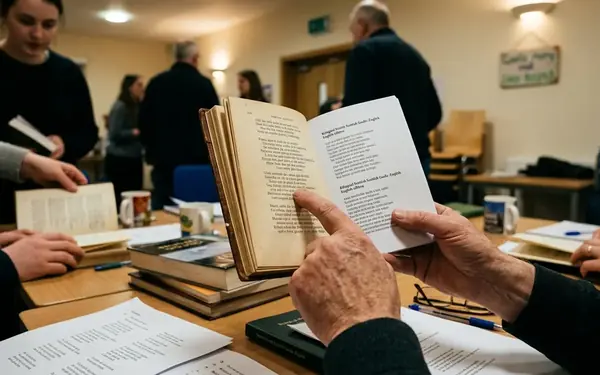
I use oral testimony, local photographs, memoirs and sound recordings to identify how that system worked in each township. I catalogue historical evidence by township, approximate decade, language, host household, contributor and form of practice, distinguishing a social ceilidh-house gathering from a staged dance or concert. Where the School of Scottish Studies Archives preserves those township recordings, host households and travelling songs become countable.
I translate the pattern into present practice through small hosted gatherings and local conveners, still inside the wider network of shared rooms. The domestic precedent supplies a method. It does not waive the present duties attached to opening a room to the public.
House Duties First
A private house should host public activity only when safeguarding, fire capacity, accessibility, insurance, neighbour disturbance and informed consent can be met. The taigh-cèilidh is a lineage, and those duties travel with it.
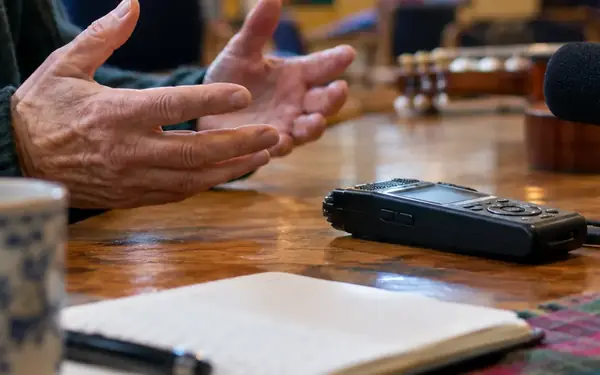
For new oral-history interviews I reserve 45 to 90 minutes, and I complete contributor consent, name preferences, Gaelic orthography checks and access restrictions before any recording is deposited. A song collected in a kitchen in 1955 still carries the name of the woman who sang it, and that name is the reason the recording is worth keeping.