Engineering Scalable Productions from the Village Hall Up
The vitality of Scotland's indigenous language demands a production framework that respects both the intimacy of a village hall and the acoustics of a national stage. Historically, touring models have treated rural venues as secondary stops, offering stripped-down versions of urban premieres. The most resilient national tours invert this model. They engineer modular performances that originate in community spaces and expand for major theaters.
Producers define the performance elements that must remain unchanged in every location. These non-negotiable elements include the Gaelic text, the musical structure, performer relationships, and audience proximity. The creative and technical teams build a community-space version around those core elements. They test this baseline under limited power and floor-space conditions. Once the foundation proves reliable, the team specifies optional lighting, scenery, and reinforcement modules for larger venues.
Scaling a production upward is a matter of additive design—scaling downward often results in a compromised, amputated version of a main-stage show. Document three distinct configurations in the production book to prevent this degradation. The core setup lists the minimum playing area, power requirements, and staffing. The intermediate setup adds selected lighting and sound equipment. The full-stage setup details the complete rig.
Complete the core design and the first small-venue test 18–26 weeks before the opening performance. Freeze the venue-specific modules 4–7 weeks before each engagement. This timeline protects the integrity of the work, ensuring that audiences in remote areas experience the same artistic rigor as those in urban centers. The core-hall, intermediate-rig, and national-stage module breakdown remains anchored to the unchanged Gaelic text, musical structure, and audience proximity.
Embedding Linguistic Authenticity at the Conceptual Stage
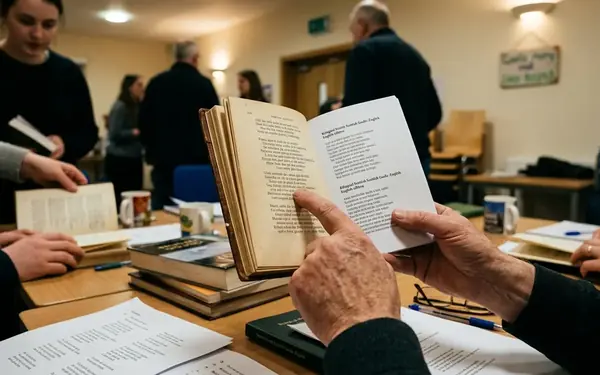
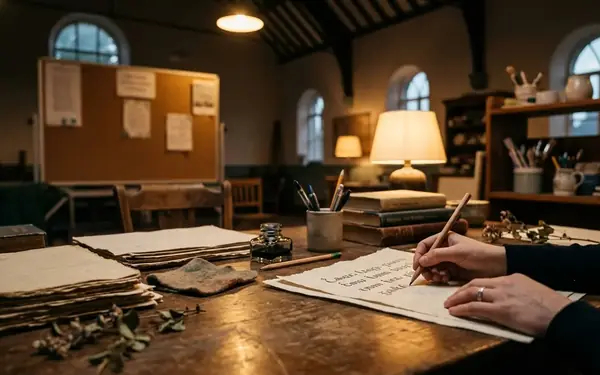
Gaelic functions as the primary medium of the artistic work. A Gaelic-language lead joins the project while the concept, script, and musical material are still being formed. This early integration ensures the language shapes the production from the inside out. The language lead identifies passages requiring dialect consultation and agrees on pronunciation and orthographic conventions with the performers. They map exactly how surtitles, projected summaries, programme notes, or spoken introductions will assist learners. Bilingual provision supports non-fluent audience members while maintaining complete immersion for native speakers.
Maintain a comprehensive language register throughout the development phase. This document contains the approved Gaelic text, pronunciation guidance for performers, dialect-sensitive terms, English support text, and the specific person responsible for approving each change.
Securing the Language Register
Secure access to this register using standard 2FA protocols to protect the integrity of the working script across distributed creative teams.
Begin this consultation process 14–22 weeks before opening. Issue review copies of scripts or song texts 6–9 weeks before arrival in a host area. Close routine language amendments 10–15 working days before the performance. Where early script reviews highlight regional variations, the language register tracks the necessary dialectal adjustments. Aligning language provision with local heritage expectations makes the production culturally resonant.
Adapting Technical Riders for Historic and Modern Spaces
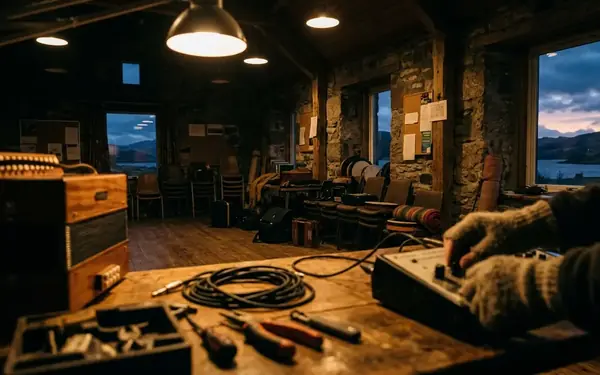
The production manager converts survey findings into a tiered rider. Essential cues and equipment are assigned to the core package. Additional fixtures, loudspeakers, and scenic pieces attach to named expansion modules. Each venue receives the lowest tier capable of delivering the artistic essentials, followed by a written list of local adaptations and a confirmation call with the person operating the building.
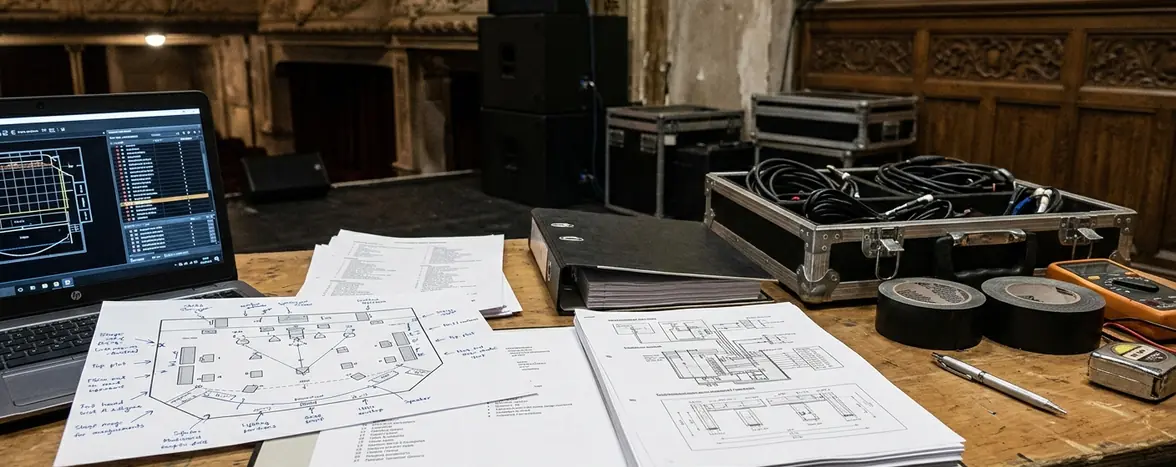
Record precise spatial and electrical metrics to inform these tiers. Document the stage width, depth, and clear height in metres. Note doorway and stair restrictions, socket locations, confirmed circuit ratings, blackout capability, reverberant surfaces, the get-in route, available ladders, and whether a competent local technician will be present. Request these technical returns 8–12 weeks before the visit. Resolve power or access questions within 5–10 working days. Issue the final venue-specific rider 15–25 working days before the get-in.
While this tiered methodology supports a baseline of technical safety across most venues, stone or timber-lined halls present an acoustic boundary where adaptable touring equipment cannot remove the room's inherent reverberation. The plan requires physical treatment in these historic spaces. Producers must implement localized acoustic dampening, use drapes, reduce stage volume, alter loudspeaker placement, and run fewer amplified sources. The stone-hall acoustic boundary separates adaptable touring equipment from reverberation that requires local physical treatment.
Documenting Cultural Impact and Community Contributions
Community engagement begins months before the performance through workshops and local historical tie-ins. Once the route is provisionally agreed, the engagement lead asks each host to identify local Gaelic speakers, schools, musicians, historians, and relevant archive material. The creative team selects connections that genuinely inform the work, schedules workshops or conversations, and secures consent for any community contribution. During the tour, a designated documentarian follows a strict shot list.
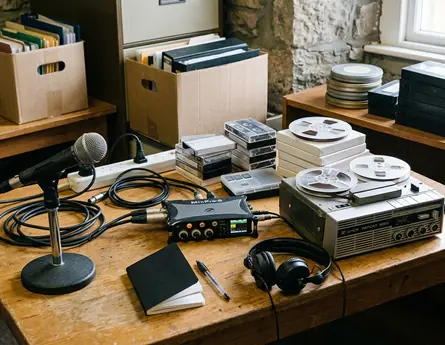
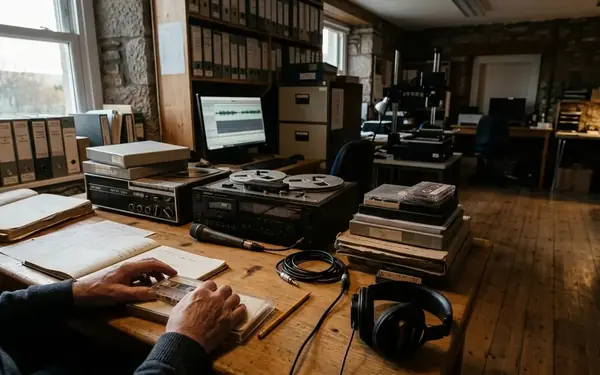
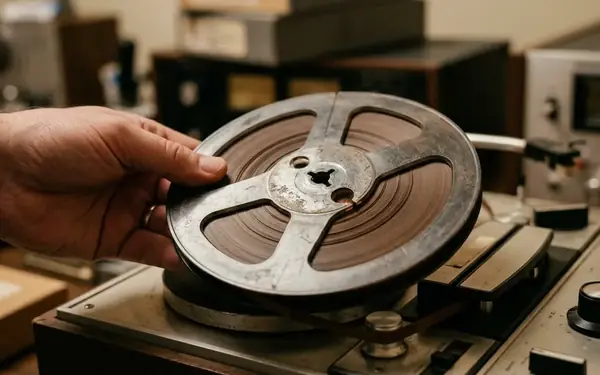
The documentarian operates as a silent observer, capturing the performance and its connections to community heritage. Establish a standardized documentation protocol to capture high-quality records for the national archive. Capture preservation audio as uncompressed WAV at 24-bit/48 kHz or higher. Retain original video files alongside access copies. Embed venue, date, language, contributor, and rights metadata directly into the files. Store signed consent records separately from public media.
Open local engagement planning 12–20 weeks before a visit. Confirm workshop content 20–35 working days beforehand. Back up all recordings within 24 hours of capture. Complete the first archival package within 10–20 working days after the tour closes. Post-tour legacy relies on leaving tangible educational materials or recorded assets with the host communities. Projects akin to St Kilda (Hiort) or Leabhar Mòr na Gàidhlig demonstrate the enduring value of rigorous archival practices. Distributing these assets via iOS/Android applications or dedicated digital platforms ensures the material remains accessible long after the physical tour concludes. Initiatives similar to Na Mo Chuid Aodaich highlight how digital legacy extends the lifespan of a theatrical work.
Executing the Pre-Tour Site and Demographic Assessment
Before finalizing any routing or signing contracts, producers execute a joint technical and linguistic audit of all prospective host communities. The producer sends one audit form to the venue contact and one to a community or language contact. Verify the responses through a call and, for uncertain sites, a physical visit. Technical capacity, Gaelic use, audience access, and routing constraints are scored separately.
Separating Demand from Capacity
Strong community demand must never conceal an unsafe get-in or unsuitable power supply. The route is approved only when both the technical and linguistic criteria meet the production's baseline requirements.
The audit matrix demands precision. Confirm socket locations and circuit information directly with the venue to establish true capacity, avoiding assumptions based on the number of visible outlets. The matrix must include:
- Measured stage width, depth, clear height, and the smallest get-in opening.
- Wall, floor, and ceiling materials to anticipate acoustic challenges.
- Access and welfare facilities, alongside local Gaelic usage contexts.
- Preferred dialect forms and potential workshop partners.
- Travel time between stops and the status of permissions or recording consent.
Launch the audit 16–24 weeks before the first performance. Allow 10–15 working days for initial returns. Conduct verification calls within the next 5–8 working days. Close critical routing decisions 6–10 weeks before contracts and transport plans are finalized.
Open your production schedule and draft the standardized audit matrix today, ensuring you separate the technical capacity scoring from the community demand metrics before sending the first venue inquiry.