Executive Summary: Global Celtic Networks
When we curate international programmes at Pròiseact nan Ealan, we build on the foundational lessons of initiatives like Leabhar Mòr na Gàidhlig and St Kilda (Hiort). We begin by asking what a partnership actually preserves. Between September 2023 and June 2025, our operating window focused on routes that already sustain repeated cultural traffic. We look to Ireland for Goidelic-language music exchange, Nova Scotia for diaspora Gaelic song continuity, and Brittany for broader Brittonic-language arts presentation.
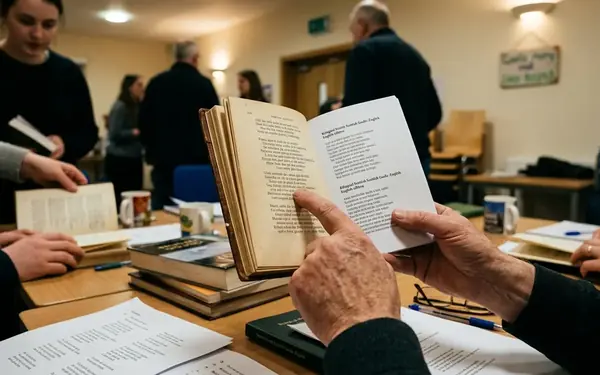
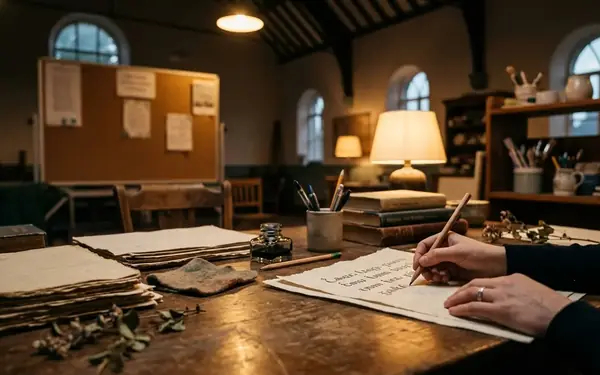
The disciplines driving this network are highly specific. We prioritize traditional music performance, textile and weaving practice, manuscript preservation, and Gaelic-language interpretation.
We must resist the temptation to project a single unified Celtic culture. Scottish Gaelic, Irish, Breton, and Nova Scotian Gaelic contexts carry entirely different language histories, repertoire conventions, and institutional pressures. Treating them as interchangeable erases the very nuances these partnerships are designed to protect.
Key Takeaway: Avoid generic pan-Celtic branding; distinct language histories require distinct curatorial approaches.
Cross-Cultural Artistic Exchanges
I often watch programmers match practitioners by discipline first, then confirm language competence, and finally set shared outcomes. For our cycles between January 2024 and August 2025, physical residency blocks for traditional musicians and textile artists typically ran from 5 to 14 working days, based on program tracking data. Advance repertoire or design preparation began 6 to 10 weeks before travel.
Documenting the Process
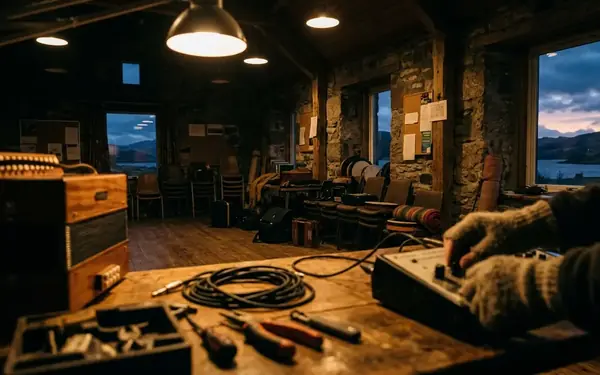
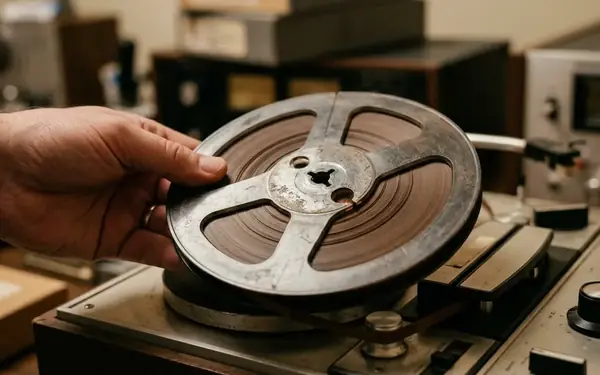
Joint music residencies leave a distinct paper trail. We document them through shared tune lists, rehearsal notes, bilingual song texts, and performer consent records. When resources allow, we capture post-residency recordings as archival-quality WAV files.
Textile exchanges demand similar rigor.
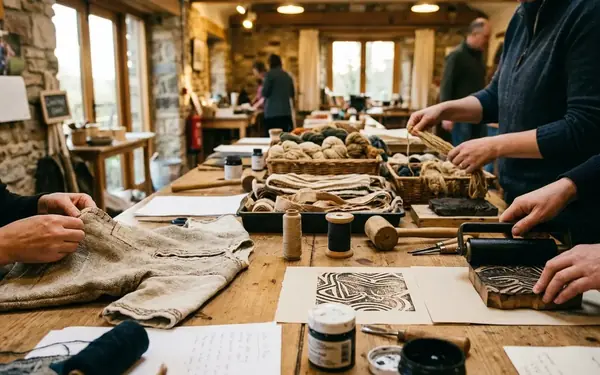
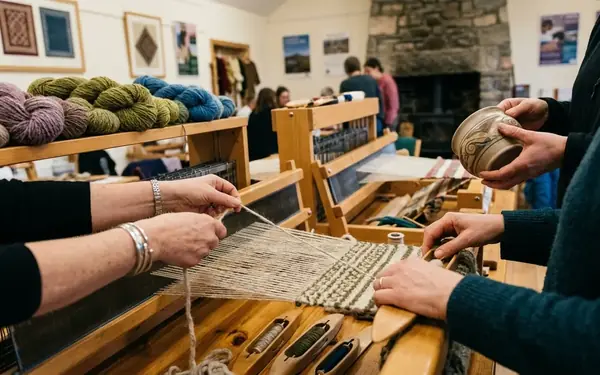
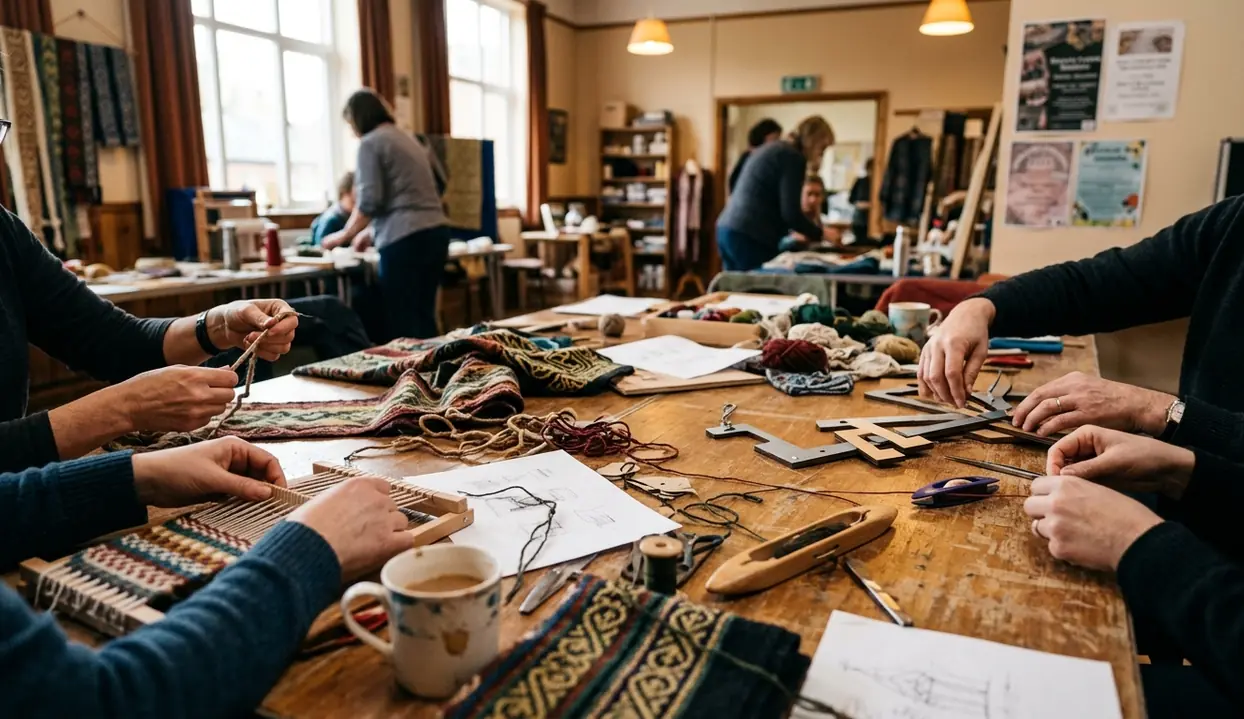
A weaver's documentation might include loom specifications, fibre type, dye-source notes, and pattern drafts. When we mount contemporary exhibitions like Na Mo Chuid Aodaich, the wall-label text and maker statements must explicitly connect these techniques across borders. We distinguish historical Gaelic motifs—knotwork, interlace, animal forms, and manuscript-inspired letterforms, from newly commissioned designs rather than presenting them as unchanged survivals.
Short residencies are highly effective for knowledge transfer. Yet they rarely provide enough time for deep language-learning outcomes unless follow-up mentoring or remote sessions continue long after the artists return home.
Academic and Archival Partnerships
The archive process begins with strict collection scoping. Partners must decide whether the shared object is a manuscript image, a catalogue record, an oral-history transcript, or a song recording. Shared digital infrastructure requires precise metadata: item title, creator or performer when known, place of collection, language or dialect, date range, rights holder, physical format, digital file format, and cultural sensitivity status.
Digital Infrastructure and Formats
We rely on defensible archival formats. Master images are stored as TIFFs, access copies as JPEG or JPEG2000, uncompressed audio as WAV, and stable documents as PDF/A. Where transcription resources exist, we use TEI-XML for encoded text and IIIF manifests for interoperable image delivery.
Pro Tip: Public access preparation increasingly means ensuring secure researcher logins via 2FA, while delivering access copies that render cleanly on iOS/Android devices for community members in the field.
Cross-referencing oral histories between Scotland and North American diaspora communities is complex work. It requires controlled place names, variant personal names, collector names, song incipits, and kinship or migration references. This level of description is only possible when participants have explicitly consented to it.
Researchers looking at the School of Scottish Studies Archives understand that oral-history comparison is fundamentally weaker when recordings lack collection location or dialect information. You cannot responsibly connect material across communities without that provenance.
Rights review normally demands 4 to 12 weeks per collection segment, especially when recordings involve multiple speakers or descendants with cultural interests in access decisions. Grant-supported documentation projects prove most credible when structured as multi-stage programmes over 12 to 36 months, moving methodically from collection audit and digitisation to metadata normalization, rights clearance, community review, and public access preparation. While our methodology prioritizes direct community consent, this approach inherently limits the speed of archival processing.
Scope and Limitations of Global Integration
Before publication or performance, our staff encounter a wall of logistical and taxonomic constraints. Metadata standardization remains notoriously difficult. Goidelic materials often require Scottish Gaelic or Irish fields for song type, dialect, and place tradition. Brittonic-linked materials demand entirely different language tags and cultural descriptors.
A single archival item can easily require an original-language title, a translated title, a collector-assigned title, a modern catalogue title, and a community-preferred title.
Safeguarding Authenticity
Consider an exhibition label that describes a Breton textile motif as simply Celtic without identifying its regional language context. This erases the fundamental difference between Brittonic and Goidelic traditions. Similarly, Nova Scotian Gaelic material preserves songs, pronunciations, and family histories that differ markedly from contemporary Scottish community usage. Diaspora evidence must be compared alongside Scottish material, rather than folded into a single Scottish baseline.
Physical exchanges face their own friction. They are constrained by airfare, instrument transport, insurance for textile works, visa documentation where relevant, accommodation, and the absolute necessity of compensating artists for rehearsal and teaching time. A realistic planning window for an international in-person exchange is 4 to 9 months from invitation to delivery, especially when freight, insurance, and interpretation are involved.
Authenticity safeguards include community review of exhibition text, clear attribution of regional origin, and separate treatment of Scottish Gaelic, Irish, Breton, Welsh, Cornish, Manx, and diaspora traditions.
Warning: Even well-funded projects can misrepresent material if they compress distinct language communities into a single pan-Celtic narrative.
Future Directions for Celtic Networks
Future work requires a staged expansion. We must first stabilise shared metadata and rights language, test small online gatherings, publish reusable research guidance, and only then scale up. For our near-term coordination running from October 2025 through September 2026, digital symposium planning is the priority.
Developing Open-Access Frameworks
These symposiums require precise specifications: platform access needs, live captioning or transcript preparation, Gaelic-language interpretation where required, recording permissions, time-zone rotation, and post-session archive deposit terms. Beneficiary reporting confirms that remote community sessions are strongest when scheduled in 75- to 120-minute blocks. We mandate separate technical checks 3 to 7 days before any public session.
Simultaneously, we are developing open-access researcher frameworks. A practical development range for this shared guidance is 6 to 15 months, allowing adequate time for technical drafting, community review, rights review, and pilot use by researchers.
- Citation guidance for sensitive materials
- Community-sensitive access warnings
- Preferred language labels and minimum metadata templates
- File-format recommendations
- Procedures for correcting catalogue descriptions
Digital access for remote Gaelic communities depends heavily on broadband reliability, device availability, and comfort with recorded participation. Online programming serves as a vital connective bridge, but it should never be treated as a full replacement for local cultural gatherings.