Executive Summary: Arts as a Catalyst for Language
Key Takeaway: Gaelic arts activity operates as a combined cultural, educational, and economic intervention rather than as entertainment alone. The evidence base links the 1996 baseline study with the sector-wide survey published in late November 2006, connecting those findings directly to post-2005 statutory language planning.
The impact story of Scottish Gaelic arts emerges from a chronological chain of evidence gathering, strategic coordination, and intensive production. Between the initial mapping in 1996 and the comprehensive sector review in 2006, cultural practitioners established a foundational link between Gaelic arts, economic development, and language preservation. We moved from isolated projects to a coordinated infrastructure.
This shift had a profound overarching impact on Foghlam tro Mheadhan na Gàidhlig (Gaelic Medium Education). Impact assessments reveal that theatre, song, radio, film, and music training expand the supply of Gaelic-language material, role models, and public-use contexts available to learners and teachers. The defensible claim here is indirect but operational. A vibrant arts sector provides the living context that classroom education requires to thrive.
To understand this evolution, we must distinguish three distinct mechanisms at work during this period. Professional capacity building elevated the technical standards of performers and writers. Community participation ensured the language remained a communal, lived experience. Strategic resource coordination aligned funding and institutional support with long-term linguistic goals.
Strategic Research and Sector Growth
Decision-makers in the mid-2000s needed updated evidence on the scale, needs, and direction of Gaelic arts before committing to new funding structures. The 1996 baseline study had mapped the initial terrain, but conditions had changed. The sector required a rigorous follow-up to justify demand-led planning.
The resulting 'Rannsachadh Mòr' survey, published in late November 2006, provided this critical evidence base. Lead researchers Prof. Alan Sproull and Dr. Douglas Chalmers from Glasgow Caledonian University served as the principal academic investigators. They compared the 2006 findings directly to the previous baseline study conducted in 1996.
Engagement metrics indicate a ten-year interval in which the sector moved from baseline mapping toward more explicit strategic development, training, and cross-sector planning. The 2006 findings documented significant sector growth and a clear demand for structured support. The report titled "Iarrtas airson nan Ealan Gàidhlig" stands as primary evidence of this demand-led planning for Gaelic arts provision, highlighting the need for better coordination across artists, educators, promoters, and Gaelic-language bodies.
Capacity Building: The Siol gu Bàrr Programme
Programme coordinators identified specific gaps in Gaelic-language media and performance skills, grouping those gaps into short, intensive modules. This initiative became the 'Siol gu Bàrr' (Seed to Harvest) training programme, operated by Pròiseact nan Ealan. Norman MacDonald (Tormod Domhnallach) coordinated these efforts, ensuring the curriculum remained focused on practical, professional outcomes rather than general cultural awareness.
The operational logic was platform preparation—radio training supported spoken Gaelic confidence and production discipline. Television comedy developed script timing and performance. Short film writing built narrative and screenwriting capacity. Music Fastrack accelerated professional readiness for musicians.
This platform-development window occurred throughout the early-to-late 2000s. The timing was deliberate. Dedicated Gaelic digital television was becoming a practical destination for trained performers and writers from 2008 onward. The programme prepared a generation of practitioners to step onto those new platforms with technical confidence.
Warning: Broadcast training produces durable impact only when trainees have routes into commissioning, production teams, or community media; training without platform access becomes a short-term skills intervention.
Cultural Productions and Community Engagement
Scripted Gaelic theatre creates contemporary public language spaces. Seonag Monk's theatrical production 'Chan eil "V" ann an Gàidhlig', co-produced with TAG Theatre Company and An Lòchran, exemplifies this approach. It brought modern, complex narratives to the stage, proving that the language could hold its own in professional theatrical settings. Yet, a theatre production can raise Gaelic visibility but may not improve language transmission if there is no follow-up workshop, school link, recording, script access, or community discussion.
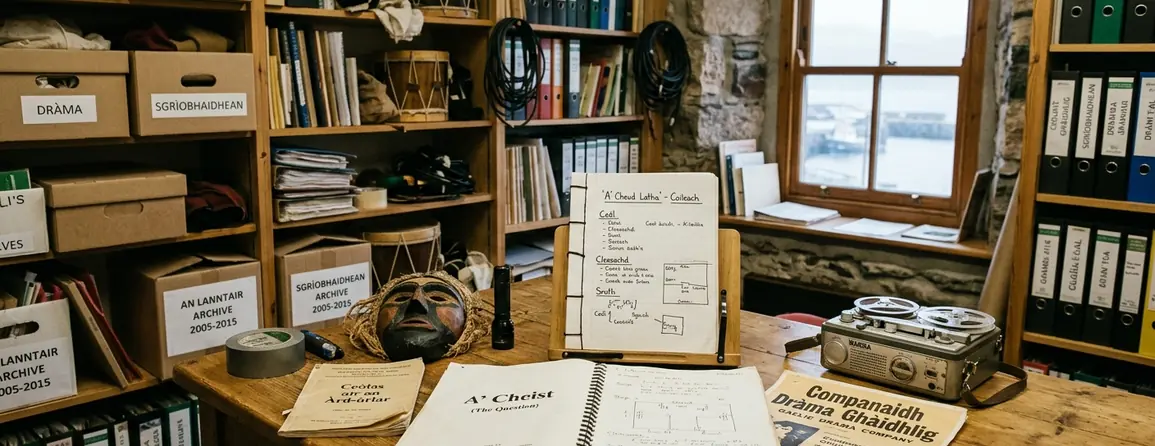
Moving from professional stage work to participatory community practice requires different tools. Gòrdan Moireach and the Murray International Language Centre (MILC) produced the 'Seinn thu Fhèin' Gaelic karaoke DVD project. This format matters operationally because it combines lyrics, recorded accompaniment, pronunciation practice, and repeatable home or classroom use.
Pro Tip: A karaoke DVD or song class can support pronunciation and confidence, but its value varies by setting. Classroom use, home practice, fèis participation, and adult learner groups each need different facilitation to maximize linguistic retention.
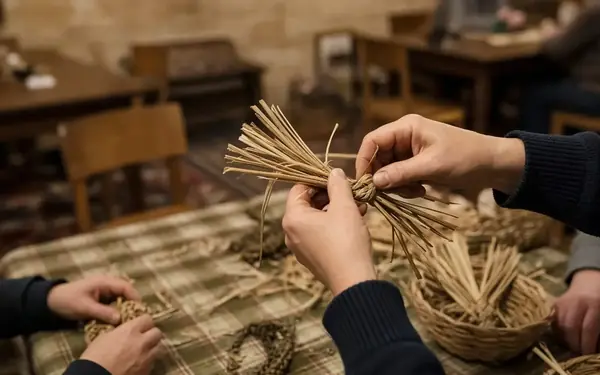
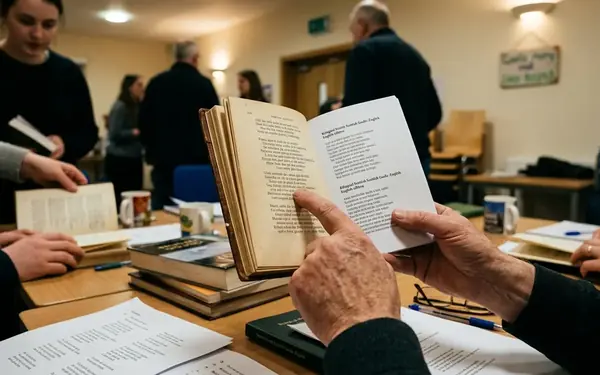
Grassroots engagement relies heavily on intergenerational transmission. Calum Martainn instructed Seinn nan Salm (Gaelic Psalm singing), preserving a distinctive practice through taught participation rather than passive archiving. Similarly, Gaelic song classes led by Murdo Dan Macdonald treated repertoire, diction, melodic style, and local memory as an integrated curriculum. These community practices ensure the language lives in the breath and voice of the people, not just in institutional documents.
Transnational Partnerships and Resource Allocation
The 2001 Gaelic arts strategic development forum served as the starting point for formalised sector coordination. By the 2005 statutory transition point, when the national Gaelic language framework gained stronger legal and institutional footing under the Gaelic Language Act, the arts infrastructure was ready to integrate with broader language planning.
We looked outward to our linguistic neighbors. The 'Ceangal' conference operated as a dedicated Gaelic-Irish-Welsh arts exchange platform. This evolved into the 'Celtic Neighbours' partnership, a three-way Celtic-language arts collaboration linking Scottish Gaelic, Irish-language, and Welsh-language cultural practice. Ealaín na Gaeltachta, Pròiseact Nan Ealan, and Theatr Felinfach drove this initiative, with vital financial support and backing from the Carnegie Rural Commission.
While cross-border cultural exchanges consistently expand artistic networks, their direct impact on local language acquisition remains difficult to isolate from broader educational initiatives. The value lies in shared methodology and institutional solidarity.
Resource allocation during this period was strictly functional. Without the underlying accounts in view, we must describe allocation by funded activity rather than inventing budget figures. Resources were directed toward research commissioning, artist training, production support, community delivery, publication of guidance materials, and cross-border exchange.
Future Outlook and Call to Action
Earlier arts projects created evidence, personnel, repertoire, and institutional habits that carried directly into the 2007-2012, 2012-2017, 2018-2023, and 2023-2028 national Gaelic language planning cycles. Arts are now positioned as a recurring delivery route within Gaelic planning, providing essential visibility, acquisition support, community use, and status-building.
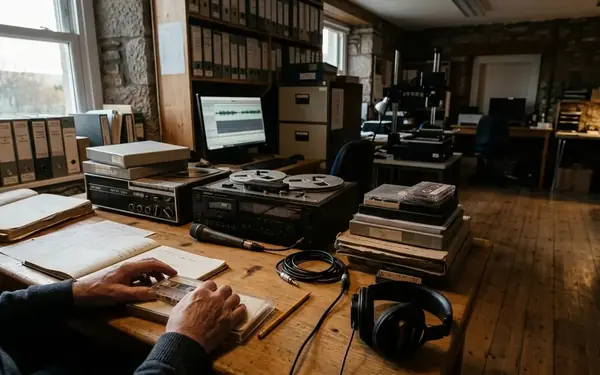
This integration relies on a dedicated delivery base. Programme coordinators, Gaelic tutors, singers, writers, theatre practitioners, music specialists, archivists, and researchers form the backbone of this effort. Norman MacDonald's coordination of training capacity, alongside the practical, scholarly, and community expertise of Calum Martainn, Murdo Dan Macdonald, Gòrdan Moireach, Dr. Anne Lorne Gillies, Prof. Alan Sproull, and Dr. Douglas Chalmers, demonstrates the breadth of collaboration required.
The work continues. We urge researchers, artists, and cultural historians to consult the archive and compare project records against local oral history. Document missing production details. Support future Gaelic-language arts training, and actively preserve reusable teaching and performance materials. The harvest depends entirely on the seeds we continue to sow.