Core Principles of the Gaelic Oral Tradition
We often make the mistake of treating song, speech, and movement as three separate skills. In the Gaelic oral tradition, they operate as a single practice. The foundational decision for any practitioner is to learn a piece first by ear, map its pulse, and only then attach meaning to the vocabulary. A defensible practice unit consists of roughly 15-25 minutes of active listening, followed immediately by 10-15 minutes of spoken repetition. Beginning with a written transcription bypasses the physical rhythm of the language.
This integration is most visible in puirt à beul, or mouth music. Before refining pronunciation, the singer must set a steady dance pulse. Reels commonly sit in a fast duple or quadruple feel. Strathspeys require a visibly tighter snap in their long-short rhythmic profile. I recommend a four-stage learning sequence spread over roughly three to four weeks. You begin by listening without the text, move to syllable imitation, progress to understanding meaning-by-phrase, and finally attempt full-tempo performance.
Narrative work demands a similar structural awareness. Before attempting full memorization of a Highland folktale, you must identify the architectural load-bearing walls. Locate the opening formula, the specific place or kinship setting, the repeated action, the crisis point, and the closing return. These elements hold the story together when memory falters.
Understanding Regional Variations and Scope
The first editorial decision in building a repertoire is defining the specific tradition you are learning. You must choose whether you are studying island Gaelic, mainland Gaelic, or a highly localized family variant. A Hebridean recording and a mainland recording of related material may share a story structure while differing wildly in vowel quality, tempo, local place references, and the amount of spoken explanation provided before the performance.
When comparing dialects, listen closely for the treatment of broad and slender consonants, vowel length, pre-aspiration, and local lexical choices rather than relying on standardized spelling. Build a source file with at least two audio witnesses of the same song or tale where possible. Ideally, pair one older archival recording with a later community or teaching performance.
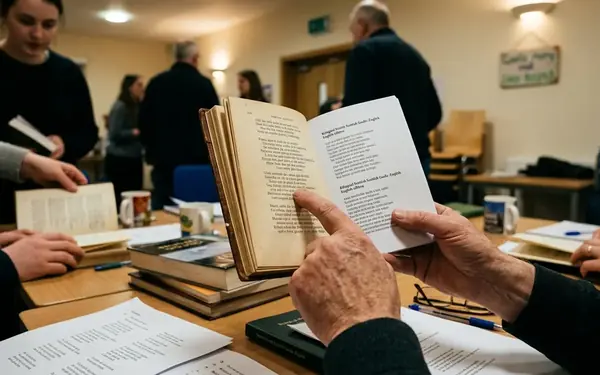
Transcription should happen in deliberate layers. Break the lines first by breath, then mark the stressed syllables, add the translation, and finally include performance notes such as tempo shifts, laughter points, or repeated vocables. For a single short puirt à beul item, allow a week or so for dialect listening before preparing for public performance. A long narrative requires several weeks before the delivery stabilizes.
While a learner outside a Gaelic-speaking community can document sound and structure carefully, local permission, pronunciation feedback, and cultural context ultimately determine whether a performance feels rooted rather than extracted.
Vocal Techniques for Puirt à Beul
A common failure case occurs when a singer learns puirt à beul from a neat written lyric. They produce accurate words but lose the dance pulse entirely because unstressed Gaelic syllables are stretched to fit a preconceived melody. Technique decisions must start with consonant rhythm, not vocal volume.
The singer isolates the dance pulse, speaks the text directly on that pulse, and only then adds pitch and ornament. Practice broad and slender consonant contrasts in short bursts of 6-10 repetitions. Focus especially around consonant clusters where the tongue position changes quickly. Breath planning is equally critical. Mark inhalations every 1-2 musical phrases. In fast mouth music, an unplanned breath breaks the dance drive far more severely than a small melodic imperfection.
Pro Tip: Rehearse grace-note effects as quick consonant or vowel flicks before adding them to full-speed singing to emulate the ornamentation of traditional bagpipe music.Build stamina through a structured tempo ladder. Spend 5-7 minutes at a slow speech pace, followed by 5-7 minutes at half dance tempo, and finish with 3-5 minutes at near-performance tempo. Repeat this cycle across a couple of weeks of practice.
Structuring a Traditional Gaelic Narrative

The storyteller decides the route of the tale before deciding the exact wording. This route normally moves from a formulaic opening into a specific place, lineage, or social setting. Mark the tale in distinct performance beats: opening, setting, first action, second recurrence, third recurrence, crisis, resolution, and closing phrase.
Celtic mythology relies heavily on the rule of three. This pattern is best practiced by giving each recurrence a distinct vocal weight. Deliver the first instance plainly, intensify the second, and slow or sharpen the third just before the narrative turn. Use pauses of 1-3 seconds before a revelation, a name, a transformation, or a reversal. Longer pauses can feel overly theatrical unless the audience is already highly engaged.
For a story of around fifteen minutes, prepare a one-page cue map rather than a full script. List the place names, characters, repeated phrases, and the final image in chronological order. This framework allows the story to breathe naturally during delivery.
Memorization and Performance Practices
Memorization should be built from place, image, and sound rather than from silent reading. The performer assigns each episode or verse to a physical location in an imagined route. Speak the text aloud while mentally walking through a doorway, past a hearth, along a path, or down a shoreline.
For a long ballad, divide the text into blocks of 4-8 lines and attach each block to one of these stable mental locations. Employ a five-pass recall cycle across two to three weeks. Listen to the source, speak with the text, speak from cue words, perform to one listener, and finally perform without stopping after errors.
During a live performance, memory lapses happen. Recover by returning to the last repeated phrase, restating the character's intention, or moving directly to the next known action rather than apologizing mid-tale. The momentum of the story matters more than verbatim accuracy.
Key Takeaway: A ceilidh-style rehearsal should include at least one run with ordinary domestic sound present, because conversational rooms require stronger pacing than studio practice.Using Archival Resources for Practice
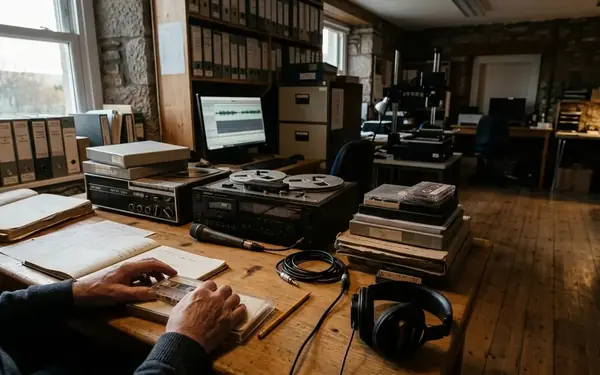
In my editorial work with Pròiseact nan Ealan, particularly during the development of Leabhar Mòr na Gàidhlig, archival study proved essential. This study begins by selecting recordings for function, not rarity. Choose items that reveal dialect, tempo, phrasing, and social use. Prioritize field recordings that include the singer or storyteller's location, the approximate recording date, collector notes, and language metadata.
Compare recordings from at least two date ranges when available. Listening to early-to-mid 20th-century field material alongside late 20th-century teaching recordings highlights how a piece has evolved within the community. A practical archive workflow takes around two weeks of working time for one repertoire item. This includes the catalogue search, first listening, slow transcription, dialect annotation, comparison recording, and rehearsal integration.
Warning: Expect variable fidelity in early sound material; surface noise, narrow frequency range, and uneven speed can obscure consonants and pitch ornaments.Institutions like the School of Scottish Studies Archives provide invaluable access to these historical field recordings. By integrating these archival findings into your personal repertoire development, you ensure that the songs of St Kilda (Hiort) and the tales of the mainland continue to resonate with historical accuracy and living breath.