
Leadership & Team Profiles for Gaelic Cultural Projects
The people behind Pròiseact nan Ealan work from method rather than instinct — documenting, measuring, and editing Gaelic cultural projects so the reasoning stays visible long after the work is finished.
Director of Cultural Programmes
Every programme decision starts with a question that has nothing to do with budget or venue. Mairi NicLeòid asks what a project must mean before anyone sketches what it should look like. That sequence sounds obvious until you watch how often it gets reversed elsewhere, where the aesthetic arrives first and the meaning is reverse-engineered to fit.
Her role sits above the individual disciplines, holding the through-line between visual arts, performance, hubs, heritage data, and literature. The work is less about issuing direction and more about keeping the strategy honest when a tempting shortcut appears.
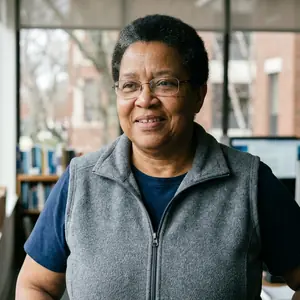
Mairi NicLeòid
Director of Cultural Programmes
I lead programme strategy from first principles, asking what each project must mean before deciding how it should look.
Visual Arts Research Lead
Most accounts of visual arts projects flatten the collaboration into a single name and a finished image. Aoife Ní Dhomhnaill refuses that flattening. She builds her understanding through close case study, and the illuminated works she documents are rarely the product of one hand.
Take a single illuminated manuscript page produced across roughly three contributors over several months. The interesting record isn't the final gilding — it's the disagreements about which Gaelic line earned the largest initial, and how those disagreements resolved. Aoife keeps that record. It is what turns a beautiful object into evidence other practitioners can actually learn from.
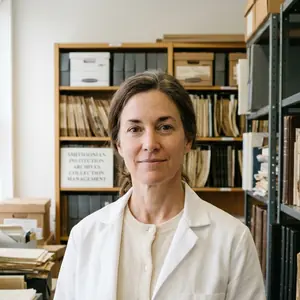
Aoife Ní Dhomhnaill
Visual Arts Research Lead
Aoife Ní Dhomhnaill documents visual arts projects through close case study of collaborative illuminated works.
Performing Arts Analyst
Calum MacAonghais starts from the outcome and works backward. When a staged Gaelic work closes, the commission isn't over for him — that's when the documented outcomes get examined against what the commission set out to do.
He treats a performance as something that produced measurable results: who came, what they understood, whether the language landed for an audience that may have arrived with very little Gaelic. The analysis is unsentimental, which is precisely why it serves the art. A commission that moved an audience and a commission that merely impressed a funding panel look identical on paper until someone insists on tracking the difference.
Performance data has limits worth naming: a single staging in one venue tells you about that night and that room, not about the work in every future context.
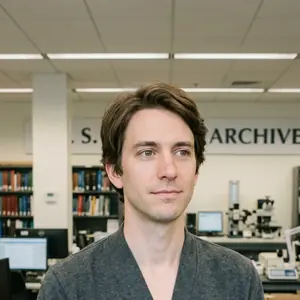
Calum MacAonghais
Performing Arts Analyst
Calum MacAonghais analyses performing arts commissions through the documented outcomes of staged Gaelic works.
Cultural Hubs Adviser
A cultural hub lives or dies on details that don't appear in the launch photographs. Eilidh Caimbeul advises on hub development by reading documented venue case studies, the kind that record what happened in the second and third year rather than the opening week.
One small island venue she studied opened with energy and a waiting list, then nearly emptied within around eighteen months. The reason wasn't the programme. It was that the building's heating bills consumed the budget that should have funded the next season of events. That is the sort of unglamorous fact a case study preserves and a press release never will, and it shapes the advice she gives anyone planning a new Gaelic hub from scratch.
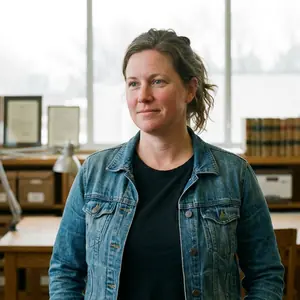
Eilidh Caimbeul
Cultural Hubs Adviser
Eilidh Caimbeul advises on the development of Gaelic cultural hubs through documented venue case studies.
Heritage Data Analyst
Reach is the word everyone reaches for and almost no one defines. Priya Raghavan defines it, then measures it. She works with structured archival data to ask what a Gaelic heritage project actually touched — not how many leaflets were printed, but which communities engaged and what they took away.
The discipline here is archival before it is statistical. A heritage record only yields honest numbers if it was kept honestly in the first place, with consistent fields and dates that mean what they claim. Priya spends a fair amount of effort on that unromantic groundwork, because an outcome figure built on a messy archive is worse than no figure at all. Where the data won't support a clean claim, she says so rather than dressing the gap.
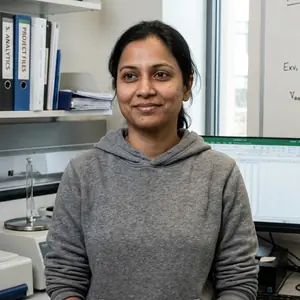
Priya Raghavan
Heritage Data Analyst
Priya Raghavan measures the reach and outcomes of Gaelic heritage projects through structured archival data.
Literature Programme Editor
Tomás Ó Braonáin edits in the open. Where many editors hand back a manuscript with the corrections made and the reasoning buried, he shows his working — why a stanza was cut, why a dialect spelling stayed, why a translation choice went one way over another.
This is partly generosity and partly method. A Gaelic writer who can see the editorial reasoning learns something they can use on the next book; a writer handed only the result learns nothing except deference. The collaborative tone matters in a language community where the pool of editors is small and trust is the scarcer resource.

Tomás Ó Braonáin
Literature Programme Editor
I edit Gaelic literary projects with an open hand, showing the methodology behind every decision we make together.