Executive Summary: Key Pillars of Exhibition Development
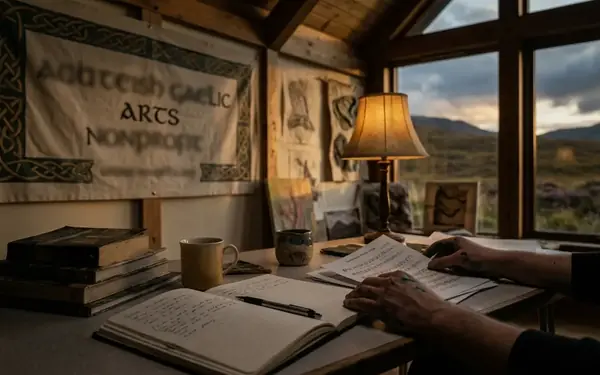
I approach exhibition strategy by asking what a project must mean before deciding how it should look. We do not build cultural programmes by picking a venue and filling it with artifacts. The sequence matters. We first confirm the Gaelic-language cultural purpose, then match each strand to a delivery asset.
Looking back at the 2009-2011 development frame, the model relies on four connected workstreams. We align with funders, establish an archive-to-performance methodology, drive online youth engagement, and map local-to-international circulation.
Operational evidence is non-negotiable.
Before a single piece of art is commissioned, the delivery package must contain letters of support, Gaelic-language media outputs, venue confirmations, artist contracts, school permissions, and archive-use agreements. Broadcast and arts-fund alignment addresses the scale required to lift these projects off the ground, ensuring that intergenerational methodologies can bridge historical archives with contemporary community engagement.
Securing Strategic Funding and Partnerships
A project with strong artwork but no confirmed media deliverables, venue dates, or archive permissions is not ready for major-funding presentation. I have seen ambitious proposals collapse because producers sought capital before defining the community benefit.
We start with funders whose remit already covers our specific cultural development, drawing on support from the Strategic Development of Gaelic Arts (GASD). Once the public-facing story and Gaelic-language outputs are clearly described, we layer in media backing. Partnering with major broadcasters like the BBC and MG Alba requires us to specify deliverables rather than rely on goodwill. We negotiate interview access, Gaelic-language coverage, archive permissions, and recorded excerpts.
Beneficiary reporting confirms that integrating charitable partners strengthens community funding appeals. By aligning with organizations such as Crossroads Care Leòdhais, the exhibition serves a dual purpose: cultural preservation and immediate social support.
The practical sequence dictates our calendar. We draft the application, confirm partners, commission artists, present locally, and finally circulate externally. Funding evidence—project synopsis, Gaelic-language rationale, draft delivery calendar, partner roles, access plan, and estimated production costs, must be assembled early. This rigorous approach aligns with national arts and heritage funding policies, ensuring our initiatives remain viable and compliant.
Implementing Intergenerational Methodologies
The curatorial method joins lived memory to performance.
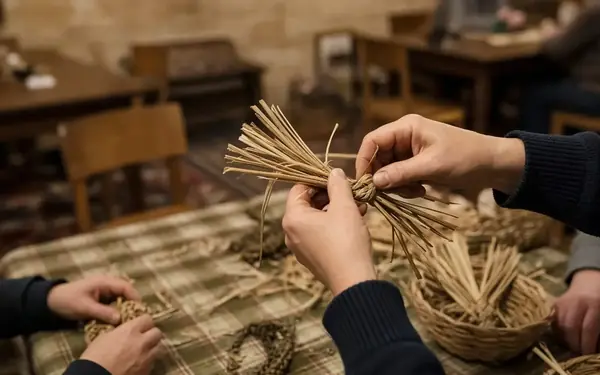
Take Na Mo Chuid Aodaich (In My Clothes) as a foundational case study. We used clothing as the primary evidence base, gathering physical garments, photographs, remembered outfits, and family stories to track changing attitudes to fashion. Older participants supplied the clothing stories, local history, and specific speech patterns. Younger artists then converted that raw material into staged or exhibited work.
This historical bridge spanned from Mary Quant's 1960s fashion culture to older island traditions. It allowed the exhibition to compare modern youth identity directly with inherited Gaelic domestic memory.
To make this work, artist roles must be strictly separated. Collaborating with local organizers like Ishbel NicLeòid builds essential participant trust. Performers like Magaidh Nic a’ Ghobhainn step in for public interpretation, translating private memories into public art. Meanwhile, a dedicated archive handler manages provenance and permissions, ensuring the physical artifacts are treated with the reverence they demand.
Integrating Digital Platforms and Youth Engagement
Digital work must function as documentation during production, not as publicity tacked on at the end.
During the 2009-2011 cycle, we employed writers-in-residence, such as David Martin, to maintain interactive project blogs on platforms like MySpace. These early social-networking blogs captured dated posts, comment threads, rehearsal photographs, draft scripts, and participant updates. Today, we secure these digital archives with strict access protocols, requiring 2FA for administrators handling sensitive community stories, while ensuring the public-facing content remains accessible across modern iOS/Android devices.
Youth engagement becomes tokenistic when students are invited only for the final performance rather than included during scripting, rehearsal, and documentation.
We developed youth-focused content, exemplified by The Hearach Factor student play. Every script draft, rehearsal calendar, and cast list was meticulously documented. We also used the Mach 10 Gaelic drama festival to encourage broader participation. Its non-competitive framework lowers the administrative burden significantly, as assessment criteria, prizes, and ranking disputes are entirely removed from the production plan.
Pro Tip: Document the messy middle. Rehearsal notes and draft scripts often hold more cultural value for future researchers than the polished final performance.
Expanding Reach: From Local Venues to International Festivals
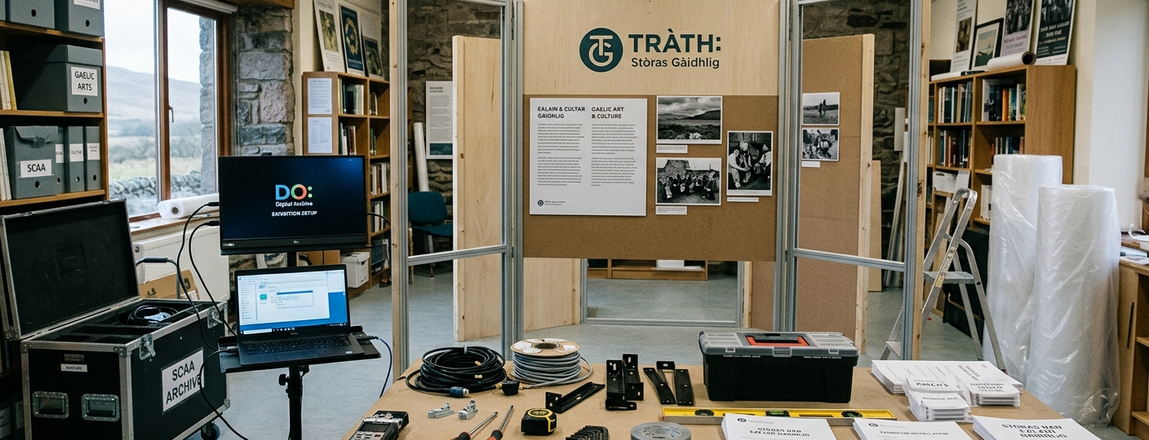
The reach strategy moves outward in deliberate stages. We anchor the work locally before attempting to export it.
Local staging begins with a recognized island arts center, such as An Lanntair, and a Gaelic cultural venue in a major Scottish city, like An Lèanag in Glasgow. These venues provide the necessary roots. Once those outcomes are documented, we use that evidence to justify presentation abroad.
Exporting Gaelic culture internationally—a path paved by earlier milestones like Leabhar Mòr na Gàidhlig and St Kilda (Hiort),requires rigorous logistical preparation. For events like FILMALBA in Germany, we prepare bilingual interpretation packs, artist biographies, image permissions, travel schedules, and technical riders. We also develop contextual material explaining specific Gaelic cultural references to foreign audiences.
Impact assessments reveal that a German presentation context strongly supports cross-cultural framing. Through subtitled film material, post-screening interpretation, and audience discussion, we build deep connections, exploring shared concepts like Gàidhealamailtich (Gaelic-German identity).
Scope and Limitations of Major Cultural Projects
Project governance depends on a small, highly coordinated group of roles: an arts agency lead, local organizers, artists, media contacts, venue staff, and volunteers. Decisions are inherently calendar-led.
The clearest planning boundary is the funding and delivery cycle itself. Outputs beyond that initial period require renewed permissions, refreshed budgets, and updated partner commitments. Pròiseact nan Ealan has historically provided the specific organizational leadership required to navigate these temporal constraints.
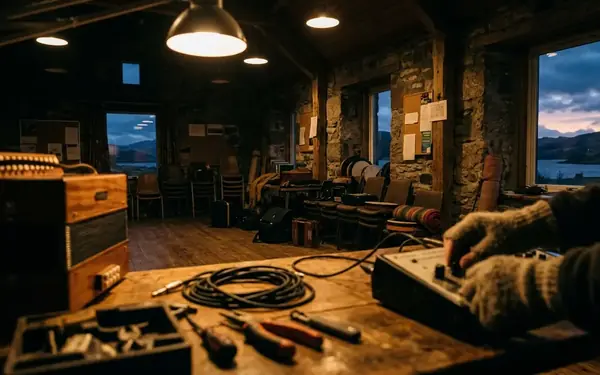
Context-dependent variation dictates our logistics. Island-based exhibitions need transport and volunteer planning far earlier than city-based projects because venue access, participant travel, and freight options are narrower. Multi-venue coordination must account for island transport, mainland venue schedules, overseas travel, customs for exhibition materials, and separate technical checks at each site.
We rely heavily on volunteer networks to execute these plans. Written task lists are essential for front-of-house support, participant liaison, transport, hospitality, translation, documentation, and post-event archive return.
Warning: There is a clear limitation to this methodology. Outside Gaelic-speaking or Gaelic-diaspora contexts, the same model requires added interpretation time, translation budget, and community brokerage before archival material can carry public meaning.
By acknowledging these logistical challenges and temporal constraints, we protect the integrity of the work. We ensure that when the exhibition finally opens its doors, the cultural narrative remains front and center, supported by a foundation of meticulous, first-principles planning.