Executive Summary: An Lanntair's Cultural Role
A working venue before an archive
An Lanntair matters because it keeps culture in use. In Stornoway on the Isle of Lewis, the centre operates as a public arts venue with gallery, performance, cinema, education, and gathering functions. That practical mix gives it a different archival character from a repository built only for storage.
The building holds exhibitions and performances, but it also holds the traces left around them: interpretation panels, programme sheets, recorded conversations, school-session plans, residency outputs, and project records. In this sense, An Lanntair bridges traditional Scottish Gaelic heritage with contemporary visual and performing arts through repeated public activity rather than through a single symbolic role.
Researchers and artists studying Hebridean culture should read the centre as a critical node, not as a complete map. Its strongest evidence base sits in programmed arts, cultural production, and related documentation. That distinction protects the argument from overreach and makes the archive more useful.
Key Takeaway: An Lanntair is most persuasive when understood as a living cultural venue whose archive grows out of exhibitions, performances, language work, and artist development.
The cultural bridge
The centre’s modern purpose-built cultural home dates to the mid-2000s, while public-facing cultural activity can be traced through programming records from the late twentieth century into the 2020s. That span matters. It lets the reader see continuity between earlier Gaelic and Hebridean arts advocacy and the more visible civic role of a waterfront cultural building.
For a Gaelic arts field shaped by projects such as Leabhar Mòr na Gàidhlig and international work around St Kilda (Hiort), An Lanntair offers a local base where language, image, sound, and public encounter can meet.
Historical Foundation and Architectural Context
Two decisions shaped the centre
The history can be read through two practical decisions. First came the emergence of a dedicated Gaelic and Hebridean arts platform in the late twentieth century. Then came the move into a purpose-built waterfront cultural building during the early-to-mid 2000s.
That sequence explains why An Lanntair does not feel like a neutral container. It carries the memory of earlier cultural organising while serving the daily needs of a modern town-centre venue. Gallery visitors, cinema audiences, school groups, musicians, and researchers enter the same civic frame.
The present building sits in the Stornoway harbour area. Arrivals, ferry movement, town-centre footfall, and cultural attendance meet in one zone. This setting gives the centre a maritime logic: people come and go, work circulates, and island culture appears as something made through movement as much as settlement.
Architecture as civic placement
The architectural point is not only form. It is placement.
In a harbour town, a cultural centre beside movement gains public visibility without needing ceremony. A person may arrive for a screening and pass an exhibition. A visiting artist may notice how weather, light, and ferry rhythms shape audience behaviour. A school group may encounter contemporary Gaelic text in the same building where adults attend an evening performance.
Nearly two decades of use as gallery, performance, cinema, education, and hospitality space have tested the building’s flexibility. Some venues separate these functions sharply. An Lanntair places them near one another, which suits a cultural ecology where song, oral narrative, visual art, and public conversation often overlap.
Archival Practices and Exhibition Scope
The exhibition file as a life-cycle record
A strong exhibition archive begins before the doors open. The most defensible capture window runs from the confirmed programming period before installation through the immediate post-closure period. That window should include planning records, live documentation, de-installation notes, and final catalogue updates.
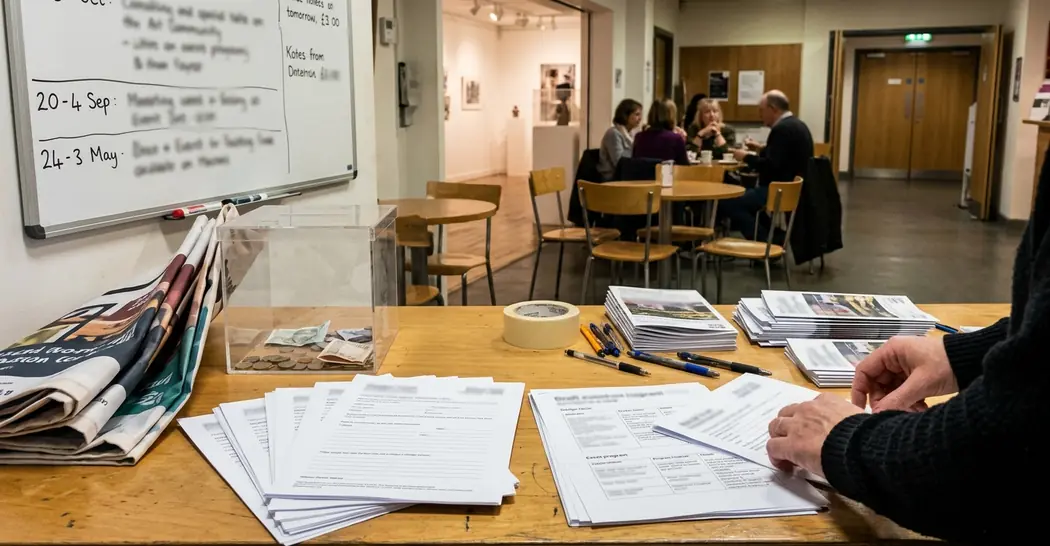
In practice, each exhibition or performance record should function as a documentation packet. The packet follows the life of the project: proposal, selection, installation, interpretation, public programme, review, and post-event record. This approach suits temporary cultural work because the event itself may vanish quickly while the surrounding evidence remains legible.
- Artist statements and curatorial text.
- Object or work lists.
- Installation photographs.
- Wall-text drafts and bilingual interpretation material.
- Publicity copy, programme sheets, and press coverage.
- Recorded talks or performances cleared for retention.
The role of a Scottish Gaelic arts agency, including the kind of project-led documentation associated with Pròiseact nan Ealan, is not to flatten the event into paperwork. It is to preserve enough context for a later reader to understand what the work asked of its audience. A wall label, a Gaelic introduction, and a recorded artist conversation may each carry different evidence.
Multimedia and the sound of meaning
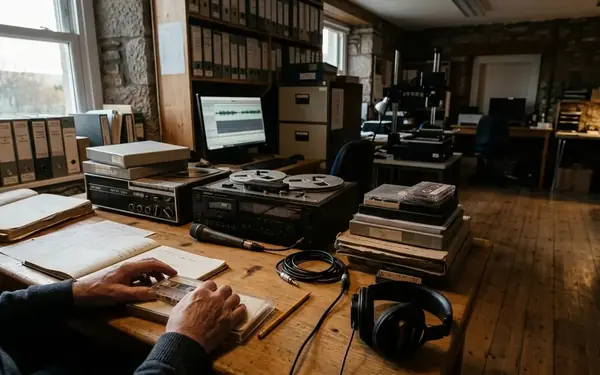
Gaelic storytelling rarely sits comfortably in text alone. Tone, pacing, gesture, and audience response change the meaning of a performance. Multimedia archives help capture these nuances, but only when rights, metadata, and technical quality receive care at the point of capture.
Consider a temporary exhibition with an artist talk in Gaelic and English. The basic record might preserve the poster and checklist. A richer record would also retain the talk, the language used, the names of speakers, the date range, the venue location, and the relationship between spoken interpretation and displayed work. The second record serves researchers better because it keeps the social life of the exhibition visible.
Community Impact and Linguistic Preservation
Continuity matters more than spectacle
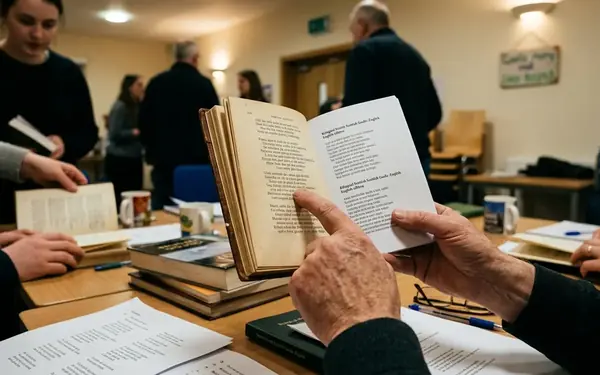
Community impact should be assessed through repeated uses of the building rather than one-off attendance claims. Language workshops, school engagement, artist talks, residencies, music sessions, screenings, and public programmes show how cultural preservation becomes ordinary practice.
The appropriate evidence range sits across multi-year programming in the 2010s and early 2020s. Gaelic preservation works through continuity: a workshop one term, a school visit the next, a residency output after that, and a new commission using Gaelic text, song, or oral narrative. No single season can carry the whole argument.
This is where the centre’s mixed-use character becomes important. A young person may first encounter Gaelic through a school-session plan, then hear it in a music session, then see it as captioning or artist text in a gallery. The route is not linear. It is cumulative.
Residencies and new work in the native tongue
Artist residency programmes carry particular weight because they move preservation from memory into production. They encourage artists to make new work in the native tongue rather than treat Gaelic as heritage décor. The evidence may appear as drafts, recorded conversations, performance notes, new commissions, or bilingual interpretation panels.
Context-dependent variation matters here. Gaelic preservation may appear as language teaching, song, captioning, oral history, artist text, or community participation, so the evidence should match the programme format rather than collapse into a single metric.
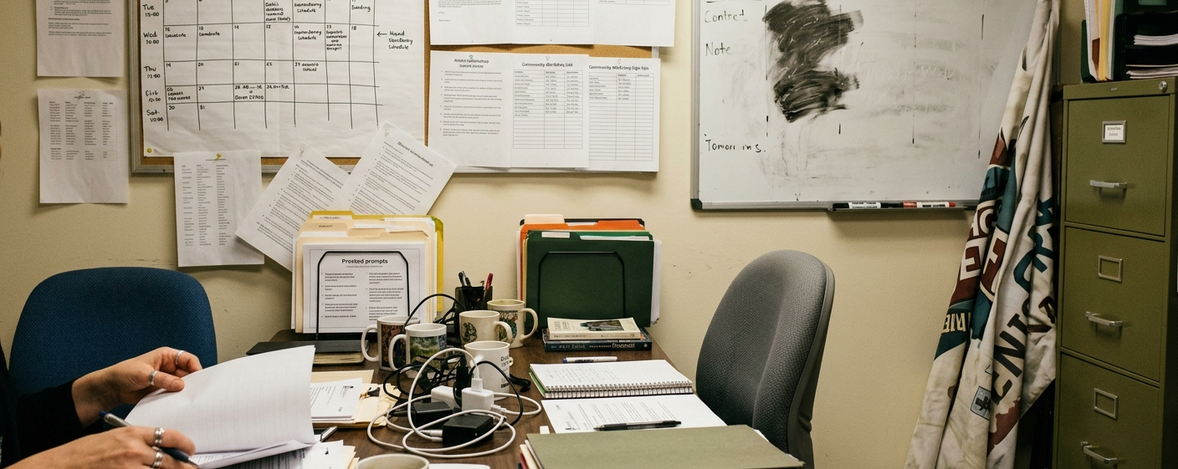
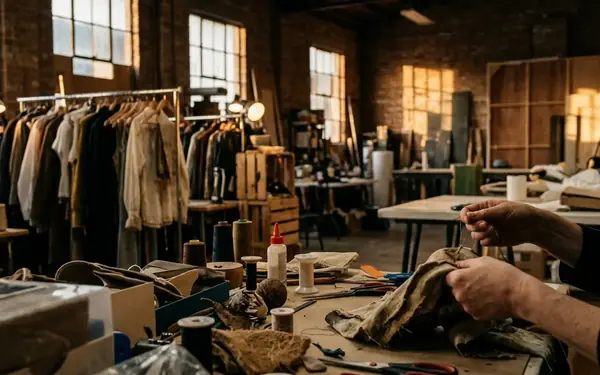
A textile-based project such as Na Mo Chuid Aodaich would demand one documentation strategy; an oral storytelling event would demand another. The first may need photographs, material descriptions, and artist statements. The second may depend on audio quality, consent, speaker names, and careful language description.
Limitations in Archival Reach and Preservation
What disappears after the room empties
The weakest archival point often appears after a live cultural moment ends. Was it recorded? Were rights cleared? Did anyone create metadata? Will the file format remain usable? These questions decide whether a public event becomes a research source or a memory shared only by those who attended.
Ephemeral materials sit at particular risk: improvised introductions, audience discussion, workshop exercises, rehearsal notes, temporary labels, social media announcements, and informal Gaelic storytelling around performances. Such fragments can carry the texture of community knowledge. They can also disappear before staff have time to name them.
Warning: Describing An Lanntair as a complete archive of Hebridean life overstates its role. The archival conclusions here apply to arts-programme documentation and cultural project records, not to civil registration, parish records, estate papers, or national museum collections.
The maritime archive problem
Stornoway’s harbour setting gives the centre civic strength, but the wider maritime environment complicates preservation. Paper, photographs, textiles, magnetic media, and display materials all need stable storage, controlled handling, and periodic condition checks across seasonal humidity changes.
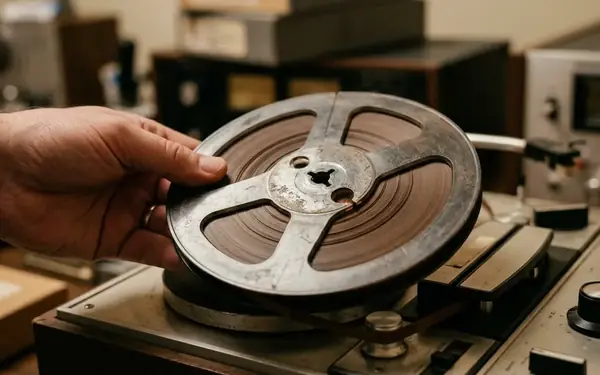
This is not a romantic problem. Damp air changes paper. Poor handling marks photographs. Older media can become unreadable before anyone notices. A venue that supports live culture must therefore balance public energy with the slower discipline of conservation.
Resource constraints sharpen the issue. Comprehensive cataloguing takes staff time, rights knowledge, language competence, and technical confidence. Without those, a collection may contain valuable material that remains effectively hidden.
Future Directions for Hebridean Arts
A staged route to digital access
The future of An Lanntair’s archive should be planned in stages, not slogans. A realistic improvement horizon runs across roughly 12- to 36-month work packages: audit and rights review first, digitisation and metadata repair second, then public access and research partnerships.
- Audit existing programme, exhibition, performance, residency, and education records.
- Review rights status, especially for recorded talks, performances, workshops, and images.
- Prioritise digitisation by cultural value, fragility, demand, and technical risk.
- Repair metadata with creator names, language used, date range, venue or island location, and file format.
- Develop bilingual description where Gaelic use forms part of the record.
- Create researcher access workflows with clear permissions and secure account practice, including 2FA where digital systems require it.
This order matters. Public access built on unclear rights can damage trust. Digitisation without metadata creates attractive obscurity. Metadata without language description can erase the very Gaelic presence the archive aims to preserve.
Pro Tip: Begin with records that already have strong contextual anchors: named creators, confirmed dates, known venue use, and clear links to exhibition, performance, workshop, residency, or education activity.
Partnerships, research, and the next Hebridean record
Academic partnerships can deepen cultural research when they serve the archive’s practical needs. The useful partnership is not a logo exchange. It helps with rights review, cataloguing practice, bilingual description, researcher protocols, or training for staff and volunteers.
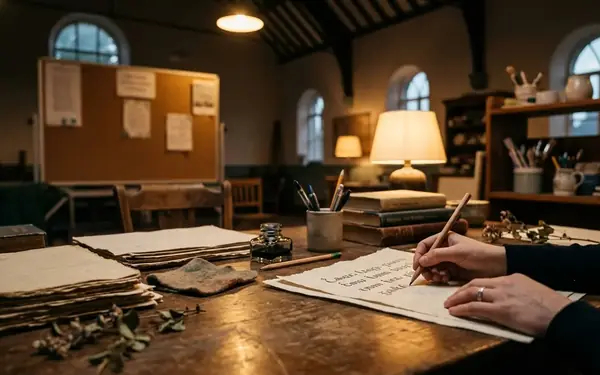
The archival team’s ongoing textual documentation of contemporary Gaelic arts deserves particular attention. Text may seem modest beside performance, film, or song, yet it often supplies the bridge between live experience and later interpretation. A carefully written curatorial note can explain why a work mattered in Stornoway at that time, in that language context, for that audience.
Digital access should also respect how people now encounter culture. Some researchers will work from university reading rooms. Others will search from phones across iOS/Android devices while tracing a family, song, artist, or island connection. The archive should meet both without reducing the material to a thin search result.
An Lanntair’s next contribution to Hebridean arts may therefore be quieter than a major opening night. It may come through cleaned metadata, rights-cleared recordings, bilingual descriptions, and project files that let future artists understand how contemporary Gaelic culture was made. That is not secondary work. It is the infrastructure of memory.