Inverness Connects Gaelic Policy, Riverside Arts and Community Music
Inverness received city status in 2000. As the administrative centre of the Highland Council, whose headquarters stand on Glenurquhart Road, it also provides a practical starting point for regional policy and funding enquiries affecting Gaelic arts across the Highlands.
For visiting practitioners, three routes organise the city: statutory bodies handling Gaelic development; major multi-arts programming beside the River Ness; and grassroots networks built around music, choirs and community participation. Each route has its own working rhythm. A programmer needs a production proposal. An archivist needs a research question. A session organiser needs to understand how a visitor hopes to participate.
Choose the route before arranging the meeting. Touring artists and academic researchers may share an interest in Gaelic heritage, yet they need different preparations and outcomes.
| Visiting practitioner | First contact | Prepare before writing | Requested outcome |
|---|---|---|---|
| Touring Gaelic theatre company | Eden Court programming team | Synopsis, running time, touring party and technical rider | Programming discussion and technical assessment |
| Contemporary visual artist | Exhibition programmer | Portfolio, display requirements and proposed installation dates | Assessment of exhibition suitability |
| Academic researcher | Highland Archive Centre staff | Research question, date range and collection references | Relevant catalogue references and reading-room arrangements |
| Traditional musician | Session organiser or choir committee | Instrument or vocal interests, repertoire and visit dates | Agreed participation or an introduction |
A preparation window of eight to twelve weeks gives a visitor room to separate archive requests, community introductions and venue enquiries. Treat this as a working allowance; use each organisation’s response to build the actual itinerary.
Match the Performance to the Room Beside the Ness
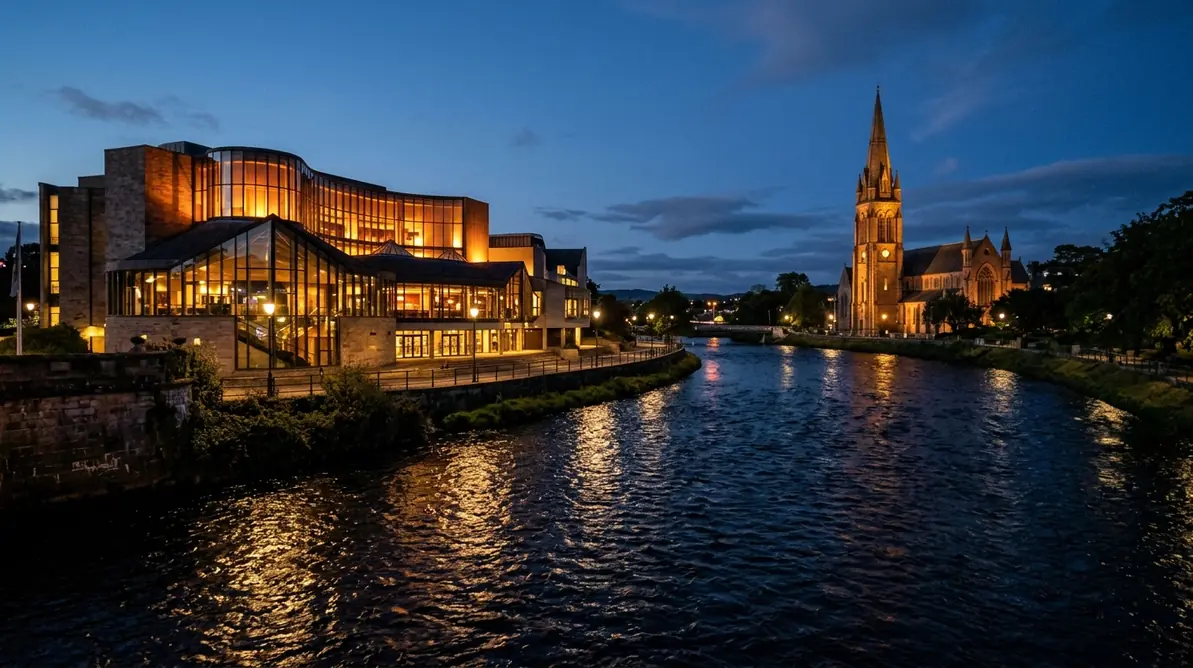
Eden Court Theatre and Cinema offers the clearest starting point for a staged production. The riverside complex opened in 1976 and completed a major redevelopment in 2007. Its programme brings together theatre, dance, cinema, music and visual-art exhibitions, with Gaelic drama and traditional music forming part of that wider multi-arts remit.
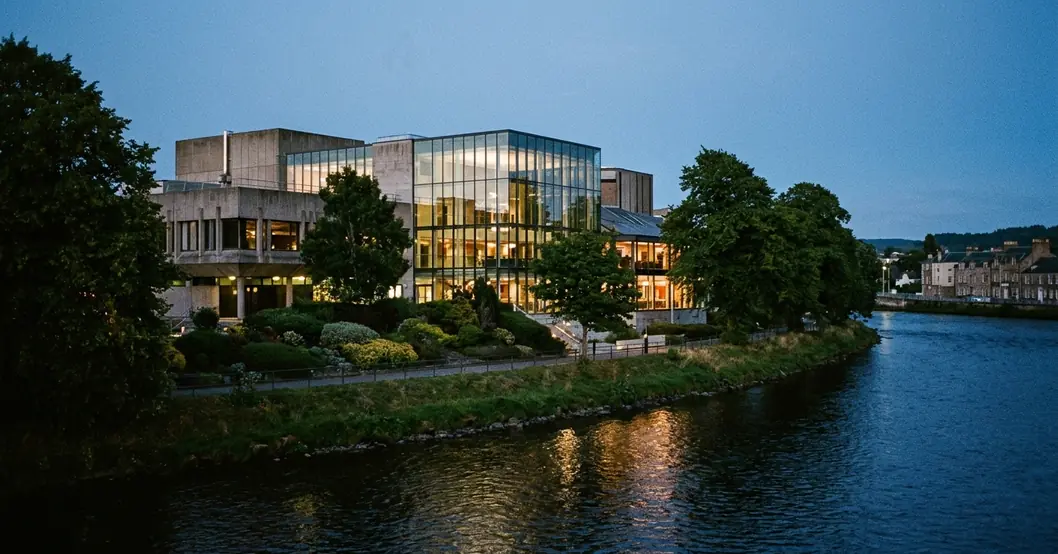
Scale affects the proposal. A Gaelic theatre troupe should establish the intended audience and staging arrangement before discussing dates. Send a synopsis, running time, company size and technical rider together, so the programming and production teams can assess the same production.
Three Formats, Three Technical Conversations
- Independent theatre: request stage dimensions, rigging information, lighting and sound inventories, get-in access and technician charges. Establish rehearsal arrangements alongside hire terms.
- Traditional music: distinguish a contracted concert from participation in an existing session. A theatre performance needs production planning; a session needs agreement about repertoire, instruments and participation etiquette.
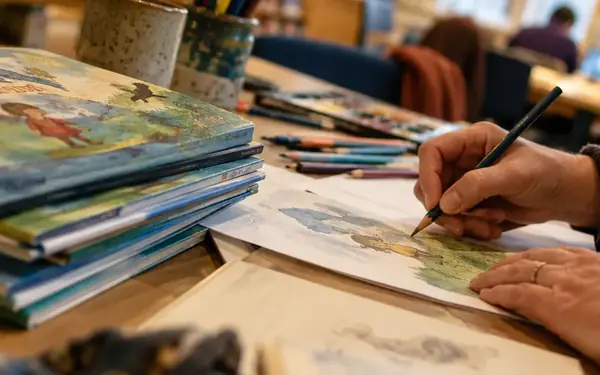
- Visual arts: send a portfolio and ask about display dimensions, hanging arrangements, installation dates and insurance requirements. An exhibition needs its own conversation with the programmer.
Hootananny and other traditional-music settings around Church Street offer a more informal environment. Community halls can provide another setting for local cèilidhs and acoustic storytelling. In either case, contact the organiser before bringing instruments, recording equipment or a proposed contribution. The social arrangement shapes the event as much as the room does.
Begin a substantial production enquiry six to nine months before the proposed performance. For a community-room booking or session introduction, allow four to eight weeks. These planning windows help distinguish a touring commitment from a shorter participatory visit.
Plan Around the Mòd and Inverness’s Summer Programme
Inverness hosted the Royal National Mòd in 2014 and 2021. Organised by An Comunn Gàidhealach, the gathering brings Gaelic singing, choral performance, instrumental music, literature and language competitions into local venues. Alongside adjudicated events, social gatherings and performances give the host city a different cultural tempo.
Those Inverness editions illustrate its recurring role within a gathering that moves between host locations. Start planning from the published host city, dates and competition syllabus for the intended year.
The first decision concerns the route into the programme: an adjudicated competition, a curated performance or an independently produced accompanying event. Each has a separate process. A competition entrant follows eligibility and entry rules; an independent producer secures a room, budget and publicity agreement.
Work Backwards From the Published Deadline
- Nine to twelve months ahead: identify the organiser, participation route and eligibility requirements. Establish whether the proposal belongs in a competition, showcase or separately booked event.
- Four to six months ahead: prepare repertoire, recordings, biographies and technical information. Let the actual entry or submission deadline control this work.
- Eight to twelve weeks ahead: confirm accommodation, rehearsal access and any auxiliary room booking. Keep independent production arrangements explicit.
- Two to four weeks ahead: reconfirm arrival times, running order and the named production contact. Share the final technical information with everyone delivering the event.
The Inverness Highland Games, normally a July fixture, and Eden Court’s summer Under Canvas programme offer different contexts for a cultural visit. Under Canvas combines live music with an outdoor hospitality setting; the Games bring sporting and cultural activity together. Match the work to the organiser’s programme rather than treating summer events as interchangeable booking opportunities.
Trace Gaelic Arts Networks Through Institutions and Project Credits
Bòrd na Gàidhlig handles national Gaelic-development responsibilities from Great Glen House on Leachkin Road, west of central Inverness. Established under the Gaelic Language (Scotland) Act 2005, it prepares the national Gaelic language plan and requires Gaelic language plans from specified public authorities. Questions about policy and organisational introductions belong on this route.
Historical questions need a different method. Pròiseact nan Ealan, the Scottish Gaelic Arts Agency established in 1987, offers a way to examine how major projects connected artists, communities and commissioning structures. Follow the credits through programmes, correspondence, publications and audiovisual documentation. This approach reconstructs the relationships that help explain later collaborative networks and cultural hubs.
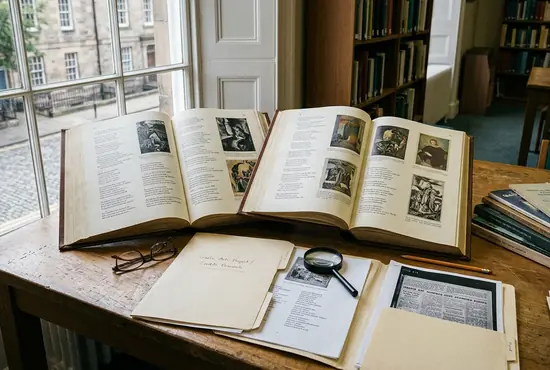
An Leabhar Mòr, launched in 2002, provides a concrete starting point for visual arts & literature research: it brought together 100 Gaelic poems and work by 100 artists from Ireland and Scotland. Its credits allow a researcher to trace collaboration across language, discipline and geography. Begin with one contributor or commission, then follow the associated people and organisations.
Prepare the Archive Request and the Choir Introduction Separately
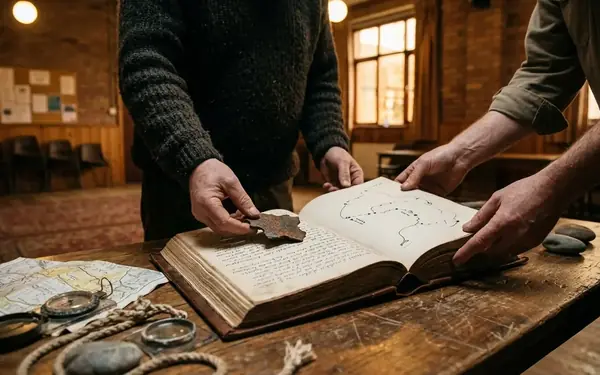
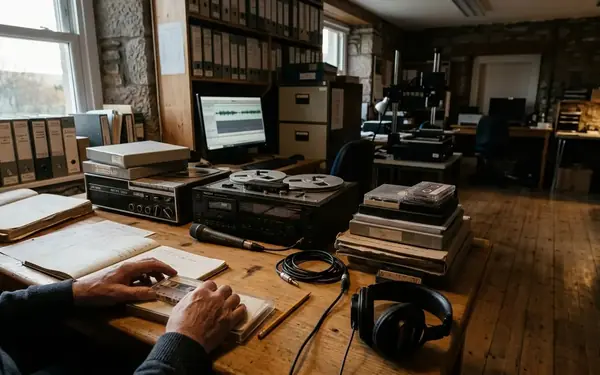
The Highland Archive Centre, opened in 2009, stands on Bught Road, Inverness, IV3 5SS. Send staff the locality or parish, people involved, approximate dates and type of material sought. Ask for relevant collections and catalogue references before requesting historical Gaelic manuscripts, organisational records or recorded testimony.
For a living performance network, approach the committee of Inverness Gaelic Choir, Còisir Ghàidhlig Inbhir Nis. Ask about rehearsal attendance, repertoire and appropriate introductions. An initial message four to six weeks before travel gives the group time to discuss the request. Archive access and choir participation answer different questions; a careful visit gives both their own space.
Arrange Gaelic Participation Before Travelling
Everyday Gaelic conversation in Inverness operates through dispersed social networks rather than a single Gaelic-speaking neighbourhood, so visitors should book rehearsals, sessions, interviews or organised language activities before arrival instead of relying on street encounters.
A useful introductory message gives the visitor’s name, affiliation where relevant, research question, proposed dates, expected meeting length and intended publication or archive destination. Plain language makes the request easier to discuss. Explain what participation involves and ask what the speaker or artist would like to contribute.
Agree the Return as Well as the Recording
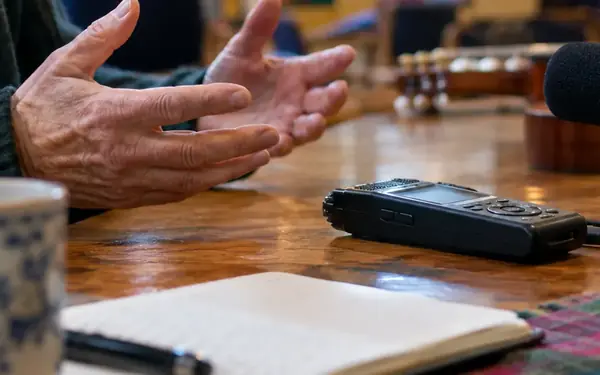
Before collecting material, agree payment or expenses, recording consent, attribution, translation responsibilities and future reuse. Permission for an interview and permission to publish its audio are separate decisions. Record agreed uses explicitly, including photographs, translated quotations and archive deposit.
Ask which language the participant prefers. Arrange competent interpretation or transcription where needed, and agree how names, Gaelic spelling and quotations will be checked. Offer a transcript, recording copy or another useful return, with a delivery date agreed directly with the participant. Carry any restrictions forward with the material.
At least four weeks before travel, contact Bòrd na Gàidhlig for organisational introductions or the Highland Archive Centre for research access. Include the project question, visit dates and the specific introduction or collection enquiry needed to make the visit workable.