Executive Summary: A Pan-European Cultural Milestone
On 29 August 1930, the final islanders left the remote archipelago of St Kilda. Decades later, Pròiseact nan Ealan framed a commemoration of this event that rapidly expanded into a European-facing Gaelic arts work. The objective was to present the island's history through a complex synthesis of language, music, and physical performance.
The resulting production, Hiort: Opara Eòrpach (St Kilda: A European Opera), launched in June 2007 across five countries. Describing the project as a standard touring opera misses the fundamental architecture of the work. The core artistic vehicle was a multimedia event combining live performance, archival film, music, dance, and live broadcast links directly from the evacuated islands.
Artistic Vision and Multimedia Integration
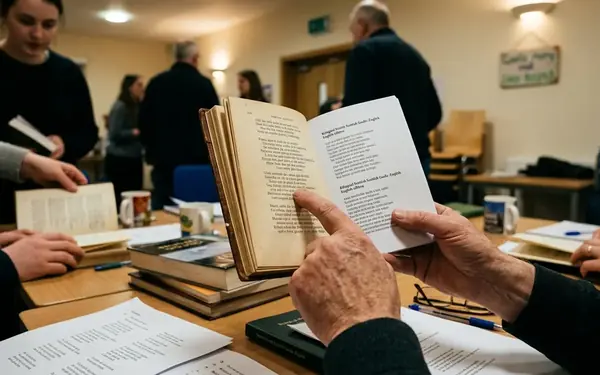
The creative team anchored the production in a Gaelic libretto written by Iain Fionnlagh MacLeòid. Directors Thierry Poquet and Gerry Mulgrew layered music, film, and vertical choreography around the physical realities of St Kilda. They focused on the sea cliffs, the traditional bird harvesting, and the profound isolation of the archipelago.
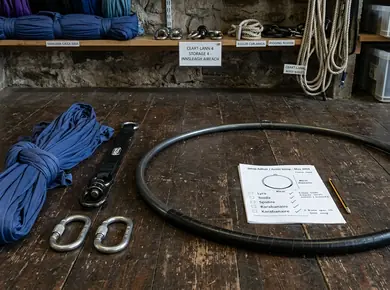
Archival integration formed the visual spine of the staging. The 1908 film St Kilda: Its people and its birds played alongside the live action, creating a dialogue between the historical residents and the contemporary performers. To evoke the perilous cliff-scaling central to the islanders' survival, a French aerial-dance troupe, Retouramont, suspended performers from theatrical rigging.
Vocal and musical contributors included Alyth NicCarmaig, Anna Latharna NicIllIosa, and clarsach player Rhona NicAoidh. The performance used both Gaelic and French, reflecting the cross-border nature of the production team and the intended European audience.
Technological Achievements in Broadcasting
Broadcast planning began from the geography of St Kilda rather than from a conventional venue specification. The production team established live links during May and June 2007. Because the archipelago is remote and uninhabited, they relied on bespoke satellite transmission directly from the islands rather than mainland venue feeds.
Today, digital preservation and remote access often rely on ubiquitous iOS/Android distribution and secure 2FA protocols for archival databases. In 2007, establishing a reliable digital distribution layer required a dedicated partnership with a public-service broadcaster for webcast streaming. Operational constraints on site were severe. The technical crew navigated transport to an uninhabited Atlantic rock, extreme weather exposure, rugged terrain, temporary infrastructure, and the complete absence of normal venue utilities.
International Performances and Festival Reach
The performance sequence moved from an island-linked Hebridean launch into mainland European presentation, culminating on a major Scottish capital theatre platform. This progression allowed the project to test its technical infrastructure locally before scaling to international arts venues.
- June 2007: The Stornoway launch performances took place on 22–23 June, establishing the live-link integration.
- November 2008: The mainland European phase brought the production to a Mons arts venue in Belgium.
- August 2009: The Scottish capital theatre performances ran at the Edinburgh International Festival.
While the available evidence supports the chronology and venue progression more strongly than it supports exact audience totals, the staging sequence clearly demonstrates the project's expanding geographic footprint. Public ticket engagement is evidenced through these dated performance windows and venue sale phases.
Industry Recognition and Cultural Legacy
Impact assessments reveal that formal recognition followed the project's demonstrated public delivery rather than preceding it. The 2007 launch established the production's technical and artistic credibility. Subsequently, the project received Scottish industry award recognition in September 2008 at a ceremony organized by a trade publisher.
The cultural legacy materialized in civic commemoration. An inaugural annual commemoration day was established on 29 August 2009. This date directly corresponds to the 1930 evacuation anniversary, specifically recalling the final 36 St Kildans who left the archipelago. For researchers examining the broader historical context, the UNESCO World Heritage documentation for St Kilda provides essential baseline data on the island's cultural significance.
Collaborative Partnerships and Resource Allocation
Resources were assembled as a cross-border production network. Pròiseact nan Ealan, acting as the lead Scottish Gaelic arts agency, coordinated the cultural brief and managed the project archive. In Brussels, Dòmhnall Iain MacAonghais represented the European advocacy support, helping position the work outside Scotland.
Public cultural endorsement included backing from Mìcheal Russell in his ministerial role. Resource-sharing across the 2007–2009 delivery arc covered artistic labor, aerial-performance expertise, venue access, broadcast support, and international promotion.
Key Takeaway: The organizational framework succeeded because it distributed specialized tasks—from French aerial choreography to Hebridean satellite broadcasting, across a decentralized network of cultural partners.
Continuing the Gaelic Arts Mission
The legacy pathway treats the opera not as a one-off spectacle but as part of a repeatable Gaelic arts method. Combining archival source material with contemporary performance yields lasting cultural dividends, much like the collaborative scale seen in Leabhar Mòr na Gàidhlig or the thematic depth of Na Mo Chuid Aodaich. The Island Tapes and Hiort - Mac-Talla Nan Eun provide relevant precedents for this archive-led multimedia approach.
Researchers examining the practical legacy period, which extends from the June 2007 launch through the August 2009 commemoration marker, should prioritize specific archival materials. Production files, scripts, stills, broadcast records, touring documentation, and press material offer the most accurate operational insights.
Pro Tip: Future partnership planning should separate artistic development, technical broadcast planning, rights clearance for archival media, and language-access work into distinct budget lines.
Later Gaelic multimedia projects may borrow the archive-plus-live-performance model, but their feasibility will change with venue rigging rules, language mix, archival rights, remote-site access, and broadcast infrastructure. The St Kilda opera remains a definitive case study in navigating these intersecting complexities.