Executive Summary: A Seven-Year Cultural Milestone
An Leabhar Mòr na Gàidhlig was never conceived as a single book. It was framed as a long-form cultural commission, developed across roughly seven years from the late 1990s planning and commissioning phase through to the 2004 exhibition and publication milestone. That distinction matters when assessing impact, because the project's operational form extended well beyond the printed page.
The Gaelic Arts Agency, Pròiseact nan Ealan, coordinated the whole undertaking. As the Scottish Gaelic arts body responsible for cross-border programming between Scotland and Ireland, it matched artists, poets, calligraphers, editors, publishers, and exhibition venues into a single sustained initiative.
The core deliverables tell the same story. They included the large-format bilingual art book, a sequence of gallery exhibitions, paired Gaelic and English poetry, an audio recording of songs, a television documentary DVD, and a dedicated project website. Read together, these components describe a programme rather than a publication.
Key Takeaway: Treating Leabhar Mòr na Gàidhlig only as a book undercounts its reach. The evidence base includes simultaneous gallery openings, an audio song release, a documentary DVD, and a continuing online archive.
Project Scope and Artistic Outcomes
The creative brief reached back to a medieval manuscript model and asked contemporary practitioners to answer it. Artists and poets were commissioned to produce new pairings of image, calligraphy, and text, with the historical precedent supplying the structural logic.
That precedent was the Book of Kells. The project drew on it explicitly, using the manuscript tradition as a way to renew cultural links between Irish Gaelic and Scottish Gaelic artistic communities — a connection the medieval scribes would have recognised.
Each completed work combined four elements within the same publication and exhibition framework:
- Visual art produced for the specific commission;
- Calligraphic inscription of the chosen text;
- Gaelic poetry, presented as the primary literary register;
- English-language translation or parallel presentation alongside it.
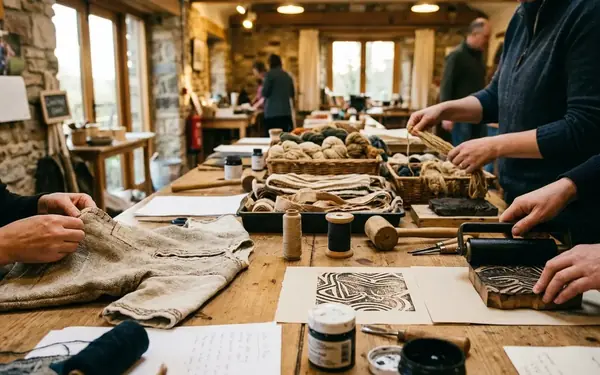
The material methods were as deliberate as the literary pairings. Recorded production techniques included handmade paper, calligraphic inscription, painted and printed surfaces, and light-sensitive materials. The choice of light-sensitive surfaces in particular signals an interest in the manuscript as a physical, changeable object rather than a fixed reproduction.
Exhibition Reach and Digital Networking
The exhibition plan was distributed deliberately. Rather than touring a single set of works from one venue to the next, the organisers opened across multiple galleries on the same date, so that island, west-coast, and urban audiences could all encounter the project at the outset.
That coordinated opening took place on 10 July 2004. Opening venues included Taigh Chearsabhagh in North Uist and An Lanntair in Stornoway, anchoring the launch in the Gaelic-speaking heartland rather than in a metropolitan centre.
The international record extends the geography considerably. A 2008 presentation at the Sir Wilfred Grenfell College Art Gallery in Newfoundland brought the work to a transatlantic audience, evidence that the project's relevance was not confined to the Hebrides or to Scotland.
Between these physical events sat the digital networking component, designed for geographically dispersed Gaelic communities. Island and transatlantic audiences who could not reliably attend a shared physical venue needed another route in, and the online network supplied it.
Pro Tip: Impact here is best read by access route. Island audiences engaged through regional gallery openings and online networking; international audiences are evidenced by the 2008 Newfoundland exhibition and the ongoing archive. A single attendance figure would flatten that distinction.
This is also why exhibition attendance alone is an unreliable measure. The archive, website, audio, and DVD components each served audiences outside the gallery circuit, and any honest assessment has to account for them.
Multimedia Expansion and Scope Limitations
Once the book and the exhibitions established a visual-literary core, the project moved into recorded sound and screen documentary. The aim was to let sung Gaelic, spoken language, and artist context sit alongside the printed and painted material.
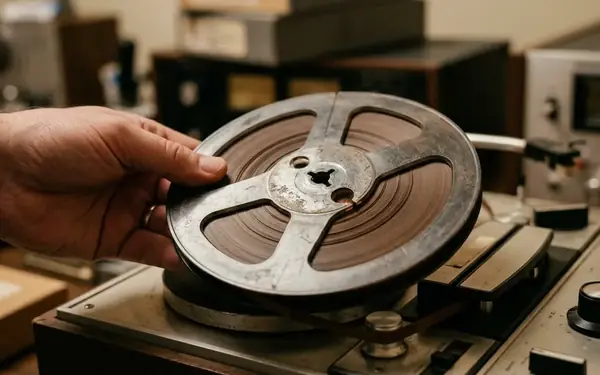
The companion audio release was titled An Leabhar Mòr – Na h-Òrain. Named performers on the song project included Eilís Kennedy, Mary Smith, and Margaret Stewart, bringing the sung tradition directly into a project that might otherwise have read as primarily visual.
The associated television documentary DVD, Is Mise an Teanga, added a further dimension. It carried the spoken language and the context of the artists into a broadcast format, reaching households rather than galleries.
These multimedia elements were not afterthoughts. They followed the 2004 publication and exhibition milestone and remained part of the project's public-facing legacy into the 2008 second-edition period.
The expansion also responded to a genuine constraint. Physical exhibition access in remote areas was always limited, and the digital and recorded outputs were the practical answer to that limitation rather than a marketing flourish.
Resource Allocation and Strategic Partnerships
Resource decisions concentrated on partnership infrastructure rather than on a single venue or product. Pròiseact nan Ealan carried the coordination and publishing responsibilities, while galleries, cultural venues, artists, writers, and performers supplied the contributing work.
The partnership model crossed Scotland and Ireland. That cross-border structure matched the project's stated aim of renewing Gaelic artistic links across the two language communities, so the organisational shape and the cultural ambition were aligned from the start.
A second edition arrived during August 2008, officiated by Mike Russell MSP. The relaunch indicates sustained demand for the work several years after the original cycle, and it gave the project a second moment of public visibility.
Around the same public-facing phase, the project was also placed within a broader Gaelic literary programme at a contemporary arts venue in Glasgow. Embedding the work in a wider literary context, rather than presenting it in isolation, extended its reach into the festival and event circuit. A real-world limit: these outcomes reflect a documented cross-border commission of its period, and conclusions drawn here apply to that specific programme rather than to Gaelic arts publishing in general.
Continuing the Legacy
The legacy strategy moved from one-time cultural production toward durable archival access. Project materials were retained through a dedicated website so that researchers, artists, and Gaelic cultural workers could continue to consult them after the initial cycles closed.
The archive is deliberately comprehensive. It preserves the large-format book record, the artist-poet pairings, the exhibition history, the audio material, the documentary context, and the supporting project documentation.
The website functions as the continuing access point. After the 2004 launch cycle and the 2008 second-edition cycle, it remains the route through which the project's full scope can be examined, which is precisely why its outputs should not be reduced to the book alone.
The intended users are clear: artists, cultural historians, Gaelic-language researchers, Celtic studies scholars, and members of Gaelic heritage communities. Outcomes demonstrate that the archive's value lies in its availability to exactly these groups.
Researchers and practitioners are encouraged to engage with the material directly through the project's dedicated archive at www.leabharmor.net, where the visual, literary, and recorded strands can be studied together.